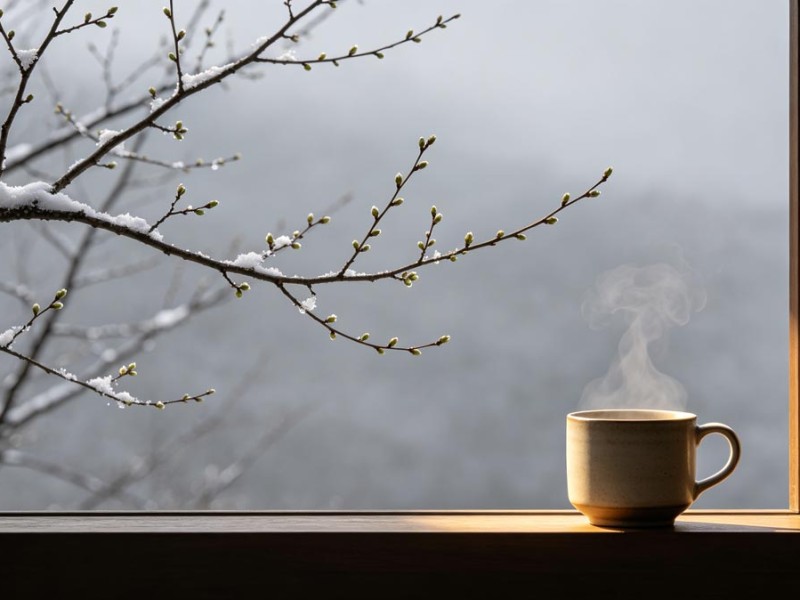
This article uses a Northern Hemisphere baseline with U.S. examples where helpful. Local weather still varies by region, so treat examples as tendencies rather than one fixed national mood.
A steady intro to Start of Spring, called Li Chun (立春) in Mandarin—the solar term that traditionally opens the spring chapter in the 24 solar terms sequence. Plus language for quiet starts: small buds, small patience, no apology if your body still feels like January.
Not medical advice, not “spring detox” science, not a guarantee of tulips tomorrow. Ice, late-winter storms, and unsafe heat still harm—follow NWS / local alerts, qualified technicians for HVAC, 988 in the U.S. for crisis moments.
February can mean mud month in one county and ice month in the next; long oceanic grey weeks in some regions; desert sunlight that still drops cold at night. Li Chun names spring's narrative beginning in classical pacing—not identical warmth everywhere—yet shared suspense: something is turning, even when thermostats disagree.
Start of Spring (Li Chun) marks the chapter where traditional calendars say spring begins—quietly, below ground, before your Instagram notices.
Calendar honesty
Why “Start of Spring” can sound like a joke during a freeze
Traditional language frames 立春 as spring stands up—qi shifting, growth initiating—often long before t-shirts make sense in Boston or Edinburgh.
Three springs compete in early February:
- Solar-term spring: Li Chun—classical “spring opens.”
- Meteorological winter (many regions): December–February bucket—still winter by forecast definition.
- Retail spring: pink marketing that gaslights your frozen hands.
Start of Spring (Li Chun) doesn’t pick a winner. It admits both: culture names spring early, weather may still say no.
How Start of Spring (Li Chun) sits between Major Cold (Da Han) and Rain Water (Yu Shui)
Rough neighbor map for seasonal reading:
- Major Cold (Da Han): major cold—heavy winter peak chapter.
- Start of Spring (Li Chun): start of spring—spring opens story, often still cold outdoors.
- Rain Water (Yu Shui): rain water—moisture rises, transitions deepen—next step.
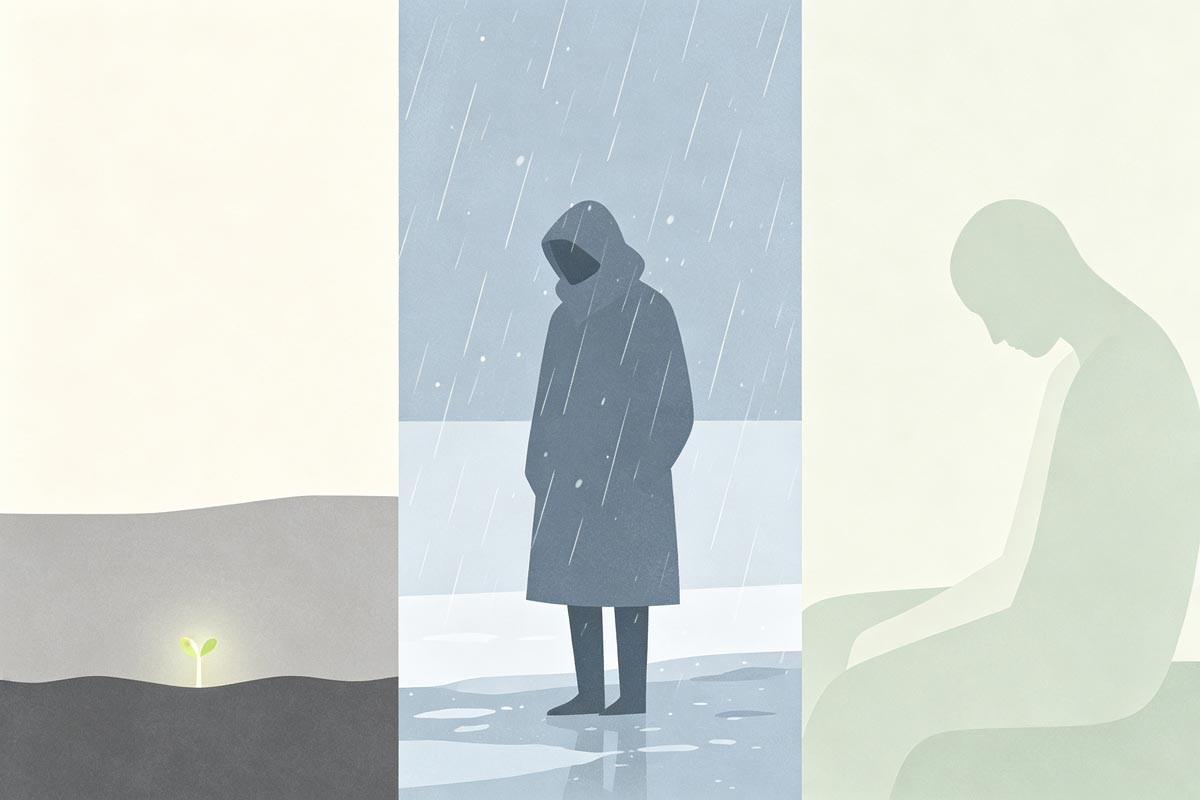
Early February in the United States and the United Kingdom is expectation management disguised as weather. Groundhog narratives grab headlines; Valentine’s grabs wallets; tax season grabs breath in some households—while sidewalks still carry salt and sunsets still arrive too soon for anyone trying to leave work with dignity.
Start of Spring, called Start of Spring (Li Chun) in Mandarin, belongs to the 24 solar terms. Classical language frames Start of Spring (Li Chun) as the moment traditional calendars say spring begins—not lush, not loud, often underground, often ambiguous above it. Translation for modern readers: initiation, permission, direction—not temperature guarantees.
If your February is grey rain and stubborn frost, Li Chun offers seasonal literacy without gaslighting: spring can start as a story while winter still holds your wrists.
What Start of Spring (Li Chun) means (without tulip propaganda)
Traditional texts describe Start of Spring (Li Chun) as spring stands—yang rising in many classical tellings—education, not a demand you adopt a metaphysics class. Useful contemporary gloss:
- Ecological hint: sap moves, birds adjust itineraries, days lengthen—subtle, measurable, not universal in timing.
- Psychological tone: some people feel permission for lighter hope; others feel irritation at premature cheer—both are human.
- Economic friction: heating bills remain, flu may still circulate, childcare chaos persists—spring marketing rarely subsidizes reality.
Quiet start in the title is not toxic positivity—it’s truth about beginnings: small, fragile, easily undone by one late freeze.
If spring optimism triggers grief—seasons used to mean someone—Li Chun makes room for both: honest longing and honest endurance, without scoring your February against a catalog.
Calendar honesty: solar spring, meteorological winter, capitalist “spring preview”
Three springs argue in February:
- Solar-term spring: Li Chun—classical spring opens.
- Meteorological winter: December–February in many Northern Hemisphere definitions—still winter in data buckets.
- Retail spring: linen ads, citrus scents, cleaning cult—noise adjacent to mud.
Li Chun doesn’t crown a winner. It offers one frame: spring can begin as narrative and biology while winter still runs logistics.
For 2026, many published tables place Li Chun around February 4—often the same month as American football’s biggest weekend in some years or Valentine’s commerce, yet different meanings—don’t merge holidays into forced metaphors. Ephemeris precision matters for widgets; reader dignity matters for humans—translate Li Chun as early February spring-opening chapter, then adapt rituals to your forecast, allergies, budget, and family bandwidth.
Lunar New Year sometimes lands near Li Chun depending on year—beautiful, not identical to solar terms—keep labels clean so readers aren’t graded on two calendars at once.
Time zones and ephemeris tables can split Li Chun by hours—translation for diaspora families is emotional work, not trivia. Grace beats pedantry when cousins argue dates across continents.
Daylight Saving returns in March for much of the US—February light gains still arrive without clock tricks. Keep DST and solar terms on separate lines so readers don’t moralize policy confusion as personal failure.
Major Cold (Da Han) vs Start of Spring (Li Chun) vs Rain Water (Yu Shui): winter peak vs spring opens vs moist transition
Readers ask how Major Cold, Start of Spring, and Rain Water differ.
- Da Han: major cold—heavy winter peak story in classical pacing.
- Li Chun: start of spring—spring opens, often still cold.
- Yu Shui: rain water—moisture, transitional damp mood later in sequence.
Meteorology laughs at poetry: a blizzard can follow spring opens in headlines—local chaos ignores elegant sequence. Use solar terms as chapter titles, not forecast contracts.
If someone asks whether climate change makes Li Chun meaningless, answer with humility and usefulness: seasons skew; communities still need language for hope-with-mud; tradition still helps name late-winter limbo—fatigue, allergy dread, money stress—even when tulips arrive on weird schedules.
Regional notes: February patchwork (US & UK)
Great Lakes snow belts can still deliver lake-effect insults during solar spring—translate Start of Spring (Li Chun) into grit and salt stains, not pastels.
Pacific Northwest may remain relentlessly grey—UK-cousin winter feel—moss, SAD risk for those prone; longer light at margins still counts.
UK: damp cold can persist through Li Chun—major winter feel without polar imagery. Quiet start can mean first brave snowdrops or simply a Tuesday you survived.
Sun Belt readers may see early pollen and false spring teasers—allergy clinics know this chapter; Li Chun still names initiation, not stability.
Urban heat islands confuse plants—buds risk freeze after warm spells. Start of Spring should respect gardeners’ patience, not moralize premature planting.
Punxsutawney shadows and similar folk weather theater belong to culture, not solar-term astronomy—Li Chun doesn’t need a rodent to authorize quiet beginnings. Enjoy February rituals if you like them; keep calendar maps clean so readers don’t merge fun with precision.
Bird migration and first insects shift with warming decades—Li Chun can pair hope with ecological humility: notice what lives here now, without turning seasonal literacy into climate denial or doom.
Outdoor labor still meets mud and freeze: construction, delivery, farm prep—spring opens in corporate slides doesn’t thaw jobsite danger. Start of Spring writing should nod to: fair wages, break tents, non-punitive weather delays.
Holidays adjacent—without merging meanings
Valentine’s, Super Bowl weekend, Presidents’ Day sales (U.S.), half-term rhythms (UK)—February is crowded. This article won’t script your ethics—only keep seasonal framing honest: Li Chun is not love’s marketing holiday, and quiet start is not mandatory cheer.
Grief can deepen when spring ads pretend everyone couples peacefully. Start of Spring language should never score loneliness—it can permit small protections: mute one feed, buy simpler food, walk with no playlist.
Work, school, bodies—and the cruelty of “spring energy” posts
Q1 pressure collides with short light for many office workers. Li Chun doesn’t prescribe productivity bounce—it can validate bandwidth realism.
Teachers face indoor illness season while windows stay shut. Parents face snow day roulette. Outdoor workers meet freeze–thaw mud. Cosy essays that ignore unsafe commutes fail reality.
Chronic illness communities watch barometric swings—migraine, arthritis, asthma—spring opens can feel like assault. Li Chun avoids triumph framing. Pacing, meds, clinical plans aren’t laziness.
Immigrant calendars may pair Li Chun with lunar new year preparations—beautiful multiplicity—keep ritual choice reader-led, not homework.
Renters can’t always open windows or plant yards—quiet start still fits as permission: one cleared shelf, one braver walk, one boundary with landlord emails about heat still needed.
Students face midterm season while days lengthen—hope and panic stack. Li Chun refuses one insult: that your pace must match spring campaign aesthetics.
Quiet rituals: what “nature’s quiet start” looks like on a February weekday
Quiet isn’t aesthetic—it’s operational:
- five minutes outside noticing twig geometry—no photo required
- swap one scroll for one sip of water—biology before branding
- open curtains earlier—let grey light register as light
- split household labor—kids, dishes, car scraping—so one nervous system doesn’t eat the whole month
Night recovery matters: consistent wake time, phone charger outside bedroom, warm socks—scaffolding when morning still hurts.
If you live alone, February marketing can sound like judgment with flowers. Li Chun permits truth: romance season is expensive. Pair metaphor with one chosen connection—chosen, not forced.
Gardeners practice restraint—seed catalogs are seductive. Start of Spring honors small experiments: one windowsill pot, not a homestead fantasy.
Faith traditions that celebrate seasonal return can align without confusion—Li Chun is solar-term literacy, not replacement theology.
Southern Hemisphere readers: February is late summer there—this article is Northern Hemisphere oriented; swap seasons mentally or seek your local spring chapter when your hemisphere turns.
How Start of Spring (Li Chun) connects Da Han to Yu Shui
If your library sequences winter-to-spring honestly:
- Major Cold (Da Han): major cold—heavy winter chapter.
- Start of Spring (Li Chun): spring opens—quiet initiation.
- Rain Water (Yu Shui): rain water—moist transition next step.
Readers who like to continue in sequence can also explore nearby terms in this late-winter to spring arc.
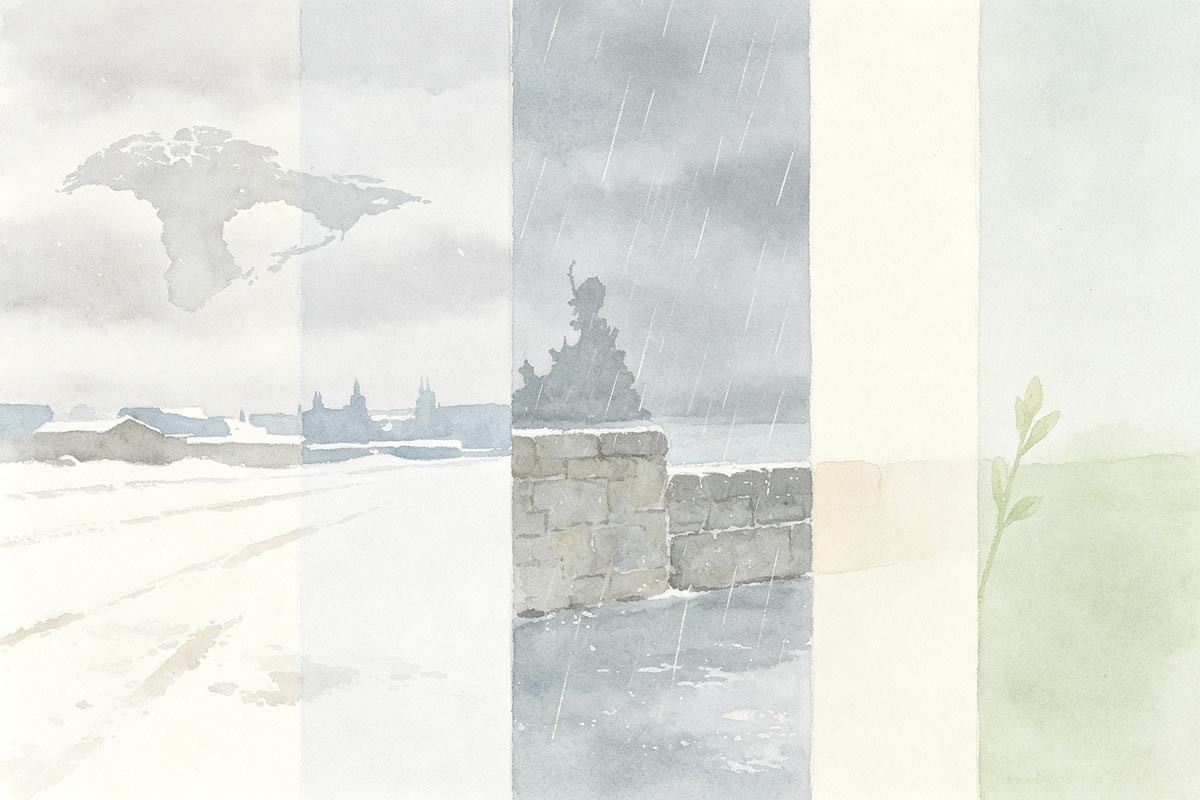
Sensory menu
Find one bud on a neighborhood tree—proof of quiet change.
Cold mud, wet bark—honest February before perfume.
Warm broth—slow chew; follow clinician guidance.
Crack a window three minutes if outdoor air suits your lungs—air exchange, not self-punishment.
Micro-plan: today, weekend, month
- Today (5 minutes)
Two lines:
- Line 1: Where is hope and exhaustion colliding—work, care, money?
- Line 2: What one gentle start fits—walk, text, sleep?
- This weekend (30 minutes)
Soil honesty: repot one plant if you have one—tiny ritual of beginnings without shopping.
- This month (one intentional choice)
Pick one seasonal realism task—replace wiper blades, donate winter coat you never wear, schedule dentist—mundane spring.
Closing
If you remember one sentence from Start of Spring (Li Chun), remember beginnings can be cold—and cold beginnings still count.
One more small practice for the week: when “spring energy” posts arrive, rename the task to “notice one real bud, drink water, sleep.” Li Chun rewards quiet honesty.
If this season’s language helps you pace a real week, Join the Rhythm in Seasonal Life—small check-ins sized for Northern Hemisphere life. When you want something tangible, Explore this season’s picks in the Seasonal Shop (we only link what is actually live). Education and lifestyle only—not medical advice.
Read next: Major Cold (Da Han) → Rain Water (Yu Shui) → the 24 solar terms guide.