Summer Solstice (Xia Zhi): Long Days, Softer Nights—Heat-Smart Calm for Peak Summer Light
Late June across the Northern Hemisphere arrives with volume. In the United States, for example, light lasts long enough to feel like a second shift—after work still looks like afternoon; kids stay wired; neighbors mow until dark; your phone fills with photos of golden hour that rarely mention heat index. Elsewhere at similar latitudes, school calendars, humidity, and heat stress stack differently—but the pressure pattern feels familiar. Summer Solstice (Xia Zhi) names that chapter in the 24 solar terms: the hinge where daylight is maximally generous—and generosity without boundaries becomes exposure.
This article won’t sell you summer as a personality. It offers seasonal literacy: long days are real, heat can be dangerous, and soft nights are not indulgent—they’re recovery infrastructure.
What Summer Solstice (Xia Zhi) means (without pretending June is only pretty)
Traditional seasonal language treats Summer Solstice (Xia Zhi) as peak summer daylight—the high-water mark of the year’s solar arc in the Northern Hemisphere’s familiar story. Poets loved it; farmers respected it; bodies sometimes argued with it.
For modern readers, the least fragile translation is practical:
- Maximum daylight can mean maximum scheduling temptation—another errand, another workout, another “life is short” impulse.
- Maximum daylight can also mean maximum burn risk for outdoor workers, athletes, elders, infants, and anyone whose cooling systems are imperfect.
- Maximum daylight includes mental stretch—more hours for anxiety to find you if you live alone with your feed.
So Summer Solstice (Xia Zhi), as we’re using it here, pairs celebration with constraints: admire the light—negotiate with it.
If you feel silly needing “permission” to rest while the sun still shines, notice how often rest is framed as failure in productivity culture. Solstice can be read as a simple physics fact: after peak daylight, incremental nights lengthen again—not dramatically overnight, but directionally. Your nervous system sometimes tracks that slower breathing room before your calendar admits autumn exists. Small truth, big relief.
Calendar honesty: astronomical solstice vs. emotional summer vs. bodily truth
Around June 20–21 each year for many locales, astronomical references describe the June solstice—when the Northern Hemisphere receives its widest daylight window relative to winter. Exact instant differs by calendar math and time zones—brands arguing about “official solstice minute” rarely help sleepless humans.
Meanwhile, emotional summer may have started Memorial Day weekend ads ago. Bodily summer might still mean heavy pollen, sticky nights, or air conditioning debates in your household.
Summer Solstice (Xia Zhi) doesn’t demand harmony across those calendars. It gives you one sentence you can repeat without lying: this is the season when light is hardest to ignore.
For 2026, many published tables place the solstice window on June 21. If your reader loves precision, link an ephemeris; if your reader loves mercy, talk about shadow length instead.
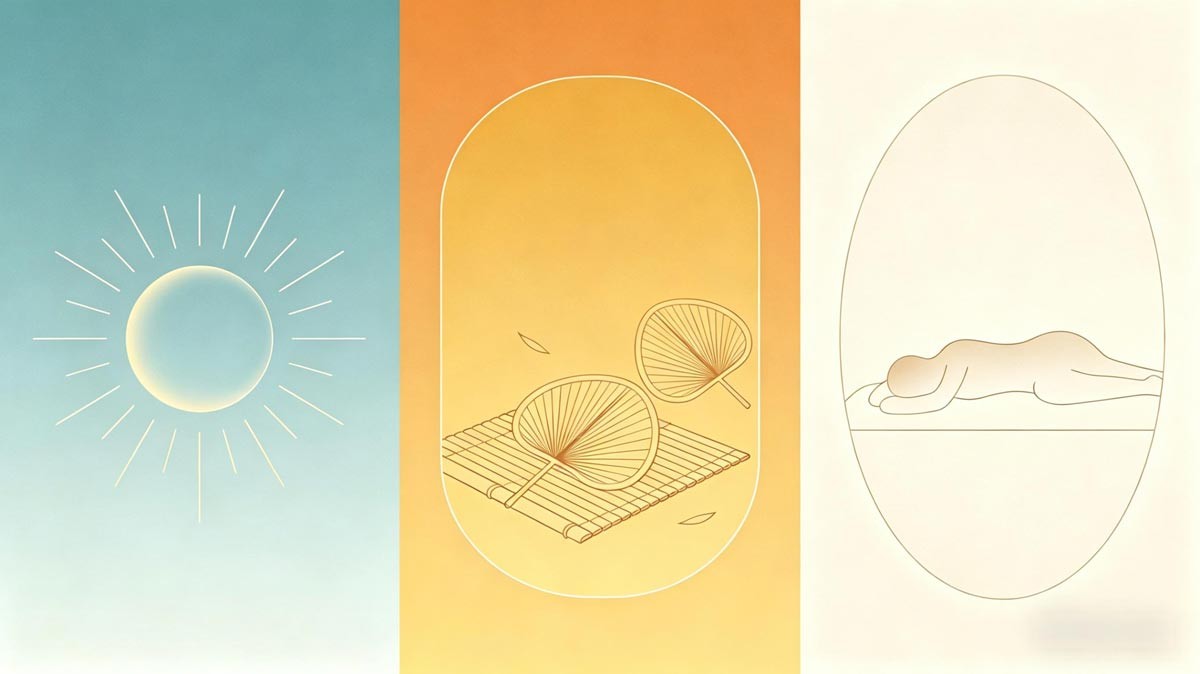
Why “longest day” is not the same as “hottest day”
Beginners—and headline writers—often confuse daylight peak with temperature peak. In much of North America, the hottest weeks often arrive later in summer when oceans, soil moisture, and atmospheric patterns align into sustained heat domes—not necessarily on solstice week.
That matters for credibility. Summer Solstice (Xia Zhi) helps you speak honestly to readers who feel already cooked in July and readers who still carry jackets in foggy coastal Junes. Both can be true at once on the same internet.
Folklore, yin-yang balance, and what we actually do with evenings
Some classical texts describe Summer Solstice (Xia Zhi) as a pivot where yang reaches an extreme and yin begins to return—big concepts you can translate without forcing spirituality:
- Yang intensity ~ full daylight drama, social pressure, visible productivity.
- Yin return ~ shade, sleep, cool floors, quiet rooms, gentle speech after sunset.
You don’t need to adopt metaphysics to benefit from the behavioral upshot: protect the night, because the day already took its share.
Regional notes: late June as many local climates
If you live in the humid Southeast, late June can feel like breathing soup. Your solstice ritual might be timing walks, respecting dew points, choosing shade routes—not chasing sunset photos if ozone or pollen punishes your lungs.
If you live in the desert Southwest, daylight is relentless and nights can cool sharply—layer literacy matters as much as sunscreen.
If you live in coastal California, June gloom may mute midday sun while evenings stay long—your longest-day story might emphasize twilight clarity rather than heat.
If you live in the Pacific Northwest, gorgeous late sunsets can coexist with moderate temperatures—heat safety isn’t universal theater; gentle evenings might be your headline.
If you live on the Great Plains, solstice week can stage spectacular thunderstorms—beauty with alert literacy.
If you live where urban heat islands amplify danger, Summer Solstice (Xia Zhi) must include equity: access to cooling centers, workplace protections, neighbor checks—not only aesthetics.
Air quality deserves a line too: late June can layer wildfire smoke, ozone, and pollen—long light only feels romantic if breathing isn’t penalized. A credibility-first solstice paragraph names limits: sometimes the sunset photo can wait behind closed windows and filtered air.
Work, parenting, and the moral drama of “you only live once summer”
June marketing sells optimization: beach bodies, remodels, bucket lists. Solstice energy can hijack shame—you’re wasting the light.
Counter-frame borrowed from actual sunlight physics: even stars burn out. Long days reward steady stewardship—hydration, breaks, realistic childcare swaps—more than hustle cosplay.
If you parent, late June can mean bedtime battles under bright skies. Blackout curtains aren’t aesthetic—they’re circadian diplomacy. If you work outdoors, solstice isn’t romance—it’s OSHA reality for many trades—respect that hierarchy.
Night-shift households experience solstice backwards—dark sleep while the world celebrates light. Seasonal language should leave room for non-default schedules without implying “you’re doing summer wrong.” Your longest day might be someone else’s hardest night.
Heat ethics: seasonal poetry must include labor truth
Seasonal wellness writing fails when it ignores who cannot choose shade. Delivery drivers, farm crews, roofers, kitchen lines, postal routes—heat isn’t vibes, it’s occupational hazard. Mention cool water, breaks, shade, checking on elders, without turning survival into mindset.
If your brand serves tea or rituals, keep claims sensory and cultural, not medical—especially for FTC / ASA trust.
June also carries many cultural calendars—Pride celebrations in many cities, Immigrant Heritage Month framing in some contexts, Father’s Day proximity in the U.S., and Juneteenth observances with deep historical specificity. Summer Solstice (Xia Zhi) doesn’t compete with those observances; it names sunlight geometry. If your campaign calendar overlaps, label clearly: seasonal wellness copy should not borrow sacred civic memory as mood lighting.
How Summer Solstice (Xia Zhi) connects Grain in Ear (Mang Zhong) to Minor Heat (Xiao Shu)
If your library moves in order:
- Grain in Ear (Mang Zhong): busy green-gold seriousness—momentum showing.
- Summer Solstice (Xia Zhi): peak daylight—maximum exposure and maximum need for recovery.
- Minor Heat (Xiao Shu): often reads like heat intensifying—the summer that stops asking permission.
Readers who like to continue in sequence can also explore nearby terms across this midsummer arc.
Sensory menu for Northern Hemisphere late June (Look, Smell, Taste, Do)
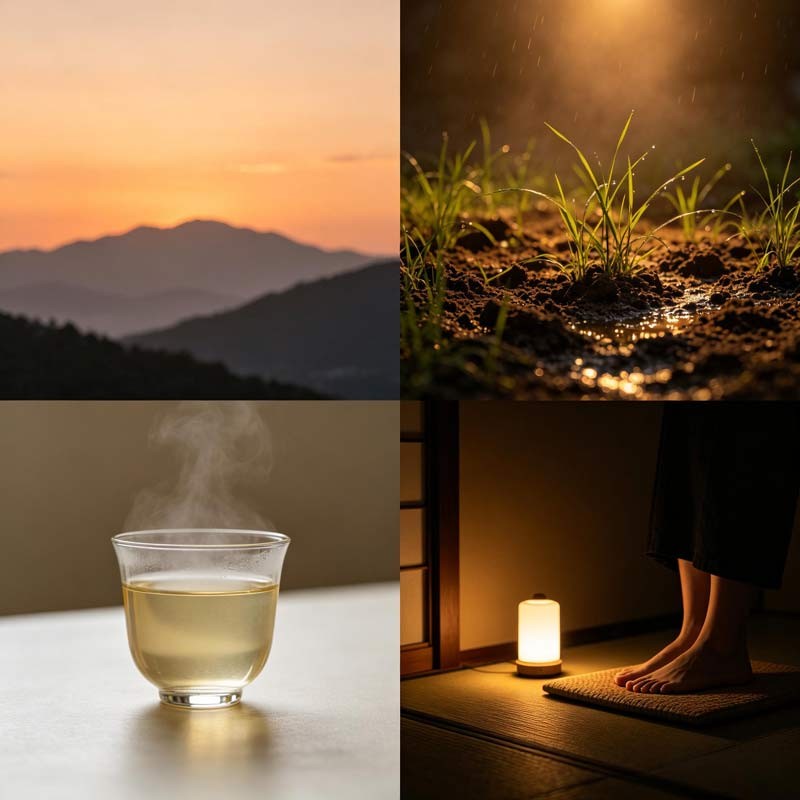
Look Watch shadows stretch—a child’s silhouette, a fence line, proof the sun still obeys geometry even when life feels chaotic.
Smell Night-blooming jasmine, chlorine, hot tar—whatever is honest; skip “pine forest” fantasy if you’re in a parking lot.
Taste Cold water with salt and time if you sweat hard—not because a blog told you to “detox,” but because bodies are boringly chemical.
Do Dim the room after sunset for twenty minutes—lower photon assault helps sleep in long-light weeks.
Micro-plan: today, weekend, month
Today (5 minutes) Two lines: what the long day asks of you / one shade you can grant yourself.
This weekend (30 minutes) Sunset moment—no photo requirement—just eyes and breath.
This month (one choice) Pick one heat-safe habit you’ll repeat—hydration cue, earlier walk, fan placement—evidence over aesthetic.
FAQ
Is Summer Solstice (Xia Zhi) always on June 21? Not universally—published tables vary slightly by tradition and ephemeris. Treat solstice timing as precision for enthusiasts and approximate direction for everyone else.
Is the solar term identical to “astronomical summer solstice”? They’re cousins. Astronomers pinpoint an instant; Summer Solstice (Xia Zhi) carries cultural seasonal framing. Use whichever helps your readers without pretending they’re interchangeable citations.
Does the longest day mean sleepless nights are inevitable? Long light can disrupt sleep cues—evening dimming, consistent wake times, and temperature management matter more than “motivation.” If insomnia persists, consult clinical guidance.
Is Stonehenge required content? Heritage sites can illustrate human fascination with sun geometry—avoid reducing living cultures to postcard props.
What if I dislike summer—or feel worse when others celebrate? Mixed feelings fit long daylight realities: heat, allergies, grief under bright skies. Therapy and peer support exist—this article names weather, not worth.
Does summer depression exist? Yes—seasonal difficulty isn’t winter-exclusive. Seek professional help if mood is unsafe.
Closing
If you remember one sentence from Summer Solstice (Xia Zhi), remember long days, softer nights—and respect the heat as weather, not a test of character.
Readers who read in sequence often continue toward Minor Heat (Xiao Shu), look back at Grain in Ear (Mang Zhong), or open the 24 solar terms overview for the full arc.