Start of Summer (Li Xia): When Warm Days Arrive—Keep Your Nerves Steady
Early May across the Northern Hemisphere is rarely one story. In the United States, for example: in parts of Texas, Florida, and Arizona, “summer” isn’t a future promise—it’s the return of sweat, sunscreen, and planning your day around shade. In northern New England or along the fog-cooled Pacific, May can still feel like spring with benefits: long light, chilly evenings, jackets in the car “just in case.”
Yet the cultural soundtrack is often singular: turn it up. Patio photos, travel ads, body talk, graduation season, the invisible rule that you should feel *ready* for the next chapter.
This article is about Start of Summer (Li Xia)—a traditional marker in the 24 solar terms that names a pivot: the year begins leaning hard into warmth, growth, and outward motion in the old calendar sense. You can use it as practical language—not homework—especially if early May hits your nervous system like a dial turned two notches overnight.
If you’re new to solar terms, treat them as pattern labels humans used to track plants, daylight, and heat—helpful metaphors for modern schedules, not a replacement for your local forecast.
What Start of Summer (Li Xia) means (without the encyclopedia)
Start of Summer (Li Xia) is the usual English rendering. In the traditional framing, this is the point where “summer” has begun in the sense of seasonal energy—even if the cultural calendar in your head—especially if you grew up with U.S.-style “summer starts in June” cues—still says “not yet.”
The useful, low-mystery takeaway: the dial moves toward summer.
You can translate that into modern life without farming a single row of crops:
- Your evening light stretches; the after-work hour changes.
- Heat becomes a daily planning variable in many warm regions at your latitude—not a surprise guest.
- Social life ratchets: weekends fill, invitations multiply, expectations rise.
Start of Summer (Li Xia) doesn’t moralize those changes. It names an inflection: the season’s story turns from “spring is beginning” toward “summer is taking the wheel.”
Calendar honesty: three “summers” and why May can feel confusing
Here’s the cleanest way to reduce shame in May: recognize you may be juggling three different definitions of summer at once.
1) Solar-term “summer” (Start of Summer / Li Xia) Often around May 5–7—a pivot in the traditional East Asian seasonal map. 2026 commonly lists May 5.
2) Astronomical summer (June solstice) The longest day in the Northern Hemisphere—around June 20–22 depending on year. Helpful for daylight math, not for “how May feels.”
3) Popular / cultural summer (often U.S.-aligned in English-language media) Often tied to Memorial Day (U.S.), school break, air-conditioning season, beach marketing—different dates, different emotional temperatures. If you’re not in the U.S., map the same idea onto your late-spring bank holidays and school calendar.
When you feel “behind” in May—not summer enough, not cheerful enough, not optimized enough—you may be measuring yourself against a billboard calendar instead of your life’s actual constraints.
Start of Summer (Li Xia) works best as a gentle reframe: transition is allowed to be uneven.
Why we mention “steady nerves” (when May stacks pressure fast)
This is not a claim that a solar term treats anxiety. It’s a realistic read of early May pressure in places where school years, fiscal cycles, and late-spring weather collide—the U.S. is one familiar example, not the universal template:
- Academic crunch hits many households.
- Work cycles can spike before summer PTO.
- Social media serves a constant “summer body / summer trip / summer glow” narrative.
- Weather can swing hard—storms, humidity, pollen, heat waves—each with its own fatigue.
If your body responds to change with irritation, overstimulation, or shutdown, that can be nervous-system load, not weakness. Start of Summer (Li Xia)—as a story you choose to borrow—can normalize a simple priority: stability over spectacle for a week or two while the season shifts.
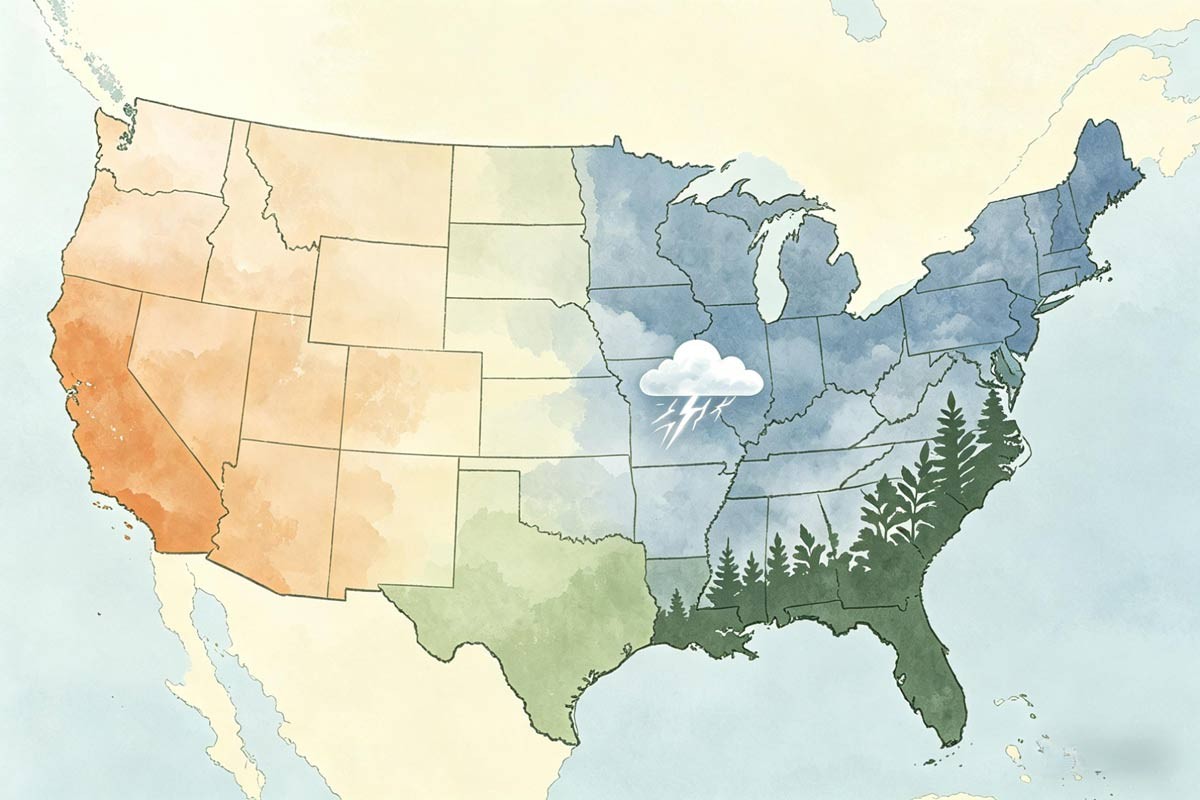
Regional notes: the Sun Belt vs. the “still-spring” belt
If you live in the Sun Belt, early May may already demand hydration habits, shade strategy, and respect for heat advisories. Your Start of Summer (Li Xia) rituals might emphasize cooling competence—earlier walks, lighter layers, realistic outdoor windows.
If you live in the Pacific Northwest, “start of summer” may still sound like a joke when the sky is gray—but light duration still changes behavior. Your anchor might be evening walks and daylight-aware scheduling, not beach imagery.
If you live in the Upper Midwest or Northeast, you may experience dramatic warmups punctuated by cold snaps. That whiplash is real. Start of Summer (Li Xia) can be a reminder to not over-trust one hot day—transition is jumpy.
If you live in Tornado Alley or regions where severe thunderstorms ramp up in late spring, early May isn’t only “pretty weather”—it can be alert-heavy weeks. A steady-nerves frame includes checking forecasts, having a plan, and not mistaking adrenaline for motivation. That’s not catastrophizing; it’s adult seasonal literacy.
Many people in temperate Northern Hemisphere cities also live through pollen season in May—eyes, throat, fatigue—that can make “summer excitement” feel like a joke. If that’s you, your Start of Summer (Li Xia) practice might be brutally practical: air quality awareness, window timing, shower-after-outside—whatever your clinician already recommends. The solar term doesn’t replace medicine; it can still describe a season that asks for gentler expectations.
The point is not to match an ideal climate. The point is to match your climate and still use the term as a directional tool.
Work, school, and the “volume knob”
In many workplaces and school systems—including common patterns in the U.S. and Canada—early May often isn’t calm; it’s compressed. Fiscal-year timelines, performance reviews, school testing, senior events, youth sports playoffs, and the pre-summer scramble can all stack on the same month your body is adjusting to heat and longer days.
Start of Summer (Li Xia) won’t erase those constraints. What it can do is give you permission to treat the month as a transition, not a finish line:
- Smaller commitments beat heroic ones.
- Repeatable routines beat one perfect “summer reset weekend.”
- One honest no can be more stabilizing than three polite maybes.
If your job culture treats May like a sprint, you can still borrow a calmer storyline for your off-hours nervous system—even if the workplace won’t.
How Start of Summer (Li Xia) fits next to Grain Rain and Grain Buds
Read these three as neighbors in one seasonal story:
- Grain Rain (Gu Yu) often maps to late spring’s rainy, pushy growth—the season’s “productive weather.”
- Start of Summer (Li Xia) maps to the heat-and-light pivot—the sense that the year’s outward chapter is opening.
- Grain Buds (Xiao Man)—typically later May—often maps to visible filling-in: swelling, promising, not finished.
Together, they read like one continuous arc—not isolated trivia. If someone lands here first, they can still quickly understand what comes next in the seasonal story.
A gentle next step is to readGrain Rain (Gu Yu) as the late-spring rain-fed growth chapter, Grain Buds (Xiao Man) as the “not full yet” chapter, and a 24 solar terms guide as the full map.
If sequence helps, you can continue with Spring Equinox (Chun Fen) → Clear and Bright (Qing Ming) → Grain Rain (Gu Yu) → Grain Buds (Xiao Man).
Sensory menu for Northern Hemisphere early May (Look, Smell, Taste, Do)

Look Notice evening light changing your street—shadows longer, sky colors later. Ten minutes of noticing counts.
Smell Catch cut grass, warm pavement, bloom—whatever is honest in your neighborhood. Registration beats romance.
Taste Choose cool drinks without gamifying detox. Slow temperature awareness supports steadiness better than extremes—especially when heat ramps fast.
Do Pick one heat-aware habit: earlier walk, blinds at peak sun, lighter bedding, or a simplified morning routine. Proof you’re cooperating with the season.
Micro-plan: today, weekend, month
Today (5 minutes) Two lines:
- Where is heat showing up—weather, calendar, people, screens?
- What’s one gentle dial-down that still respects your job and family realities?
This weekend (30 minutes) Be outside without optimizing it—no mileage goal—at a temperature that won’t punish your body.
This month (one choice) Choose one boundary against optional summer pressure—mute, postpone, decline—so your entry into the season has breathing room.
FAQ
When is Start of Summer (Li Xia)? Usually early May in the Northern Hemisphere—May 5 on many published calendars for 2026.
Isn’t summer June 21? Astronomically, the June solstice marks an extreme point of daylight. Traditional solar terms slice the year differently; Start of Summer (Li Xia) marks an earlier pivot. Both frameworks can coexist if labeled clearly.
Is Start of Summer (Li Xia) Memorial Day? No—different meanings. Late May holidays can amplify “summer vibes,” but Start of Summer (Li Xia) is typically early May.
Why focus on nerves? Because early May often stacks social heat + literal heat + schedule pressure. Language helps some people regulate expectations—not because a term replaces clinical care.
What if May is still cold here? Lean on light schedule cues and clothing reality. Start of Summer still describes a direction, not your shorts.
Closing
If you remember one sentence from Start of Summer (Li Xia), try: the dial moves toward summer—and you’re allowed to meet that shift with steady steps, not a cinematic makeover.
You can also carry a second sentence for the early May that won’t cooperate with your fantasies: same season, different postcode or ZIP code—your job is steadiness in *your* weather and *your* calendar, not a national average.