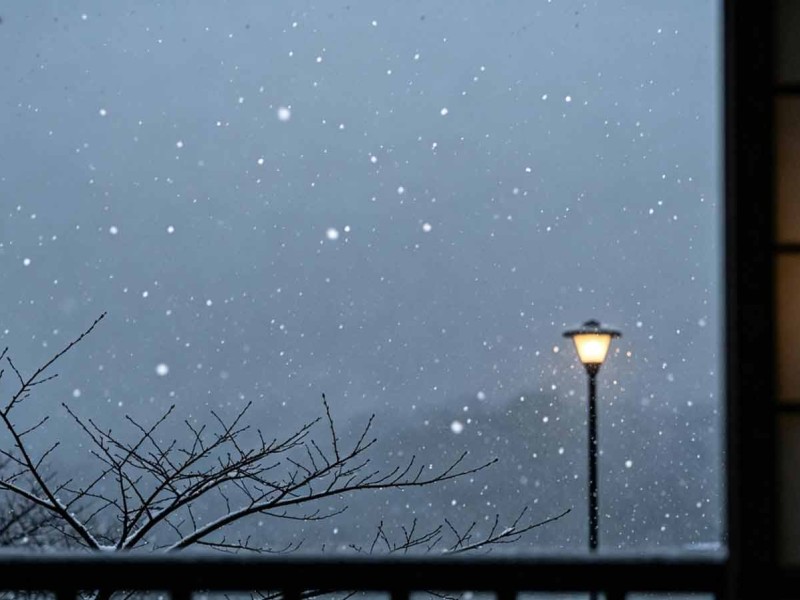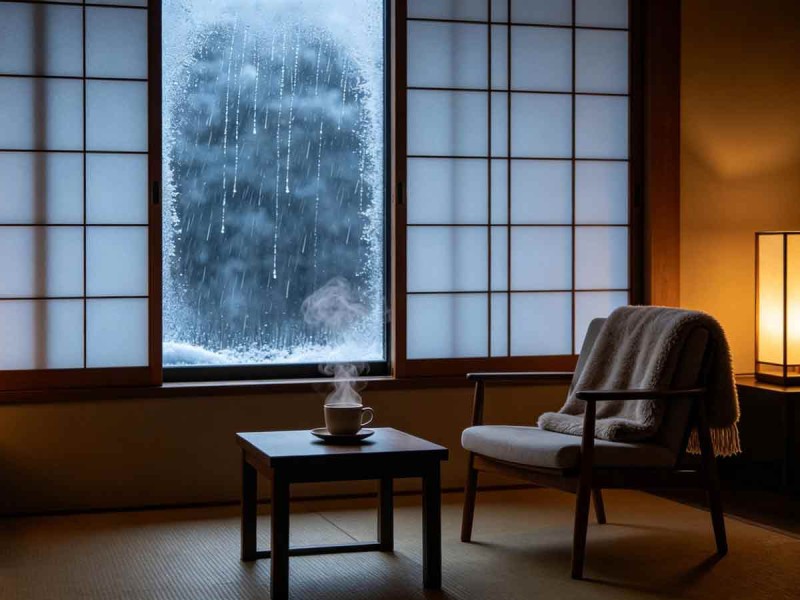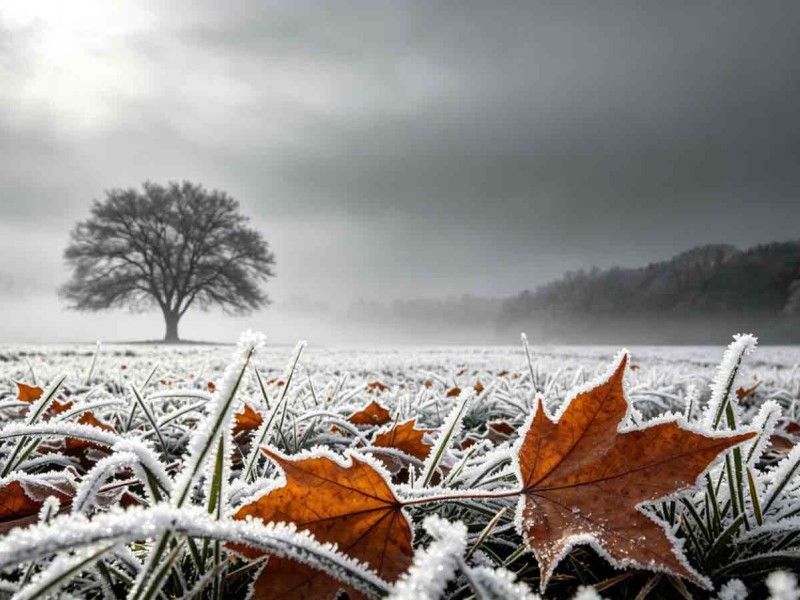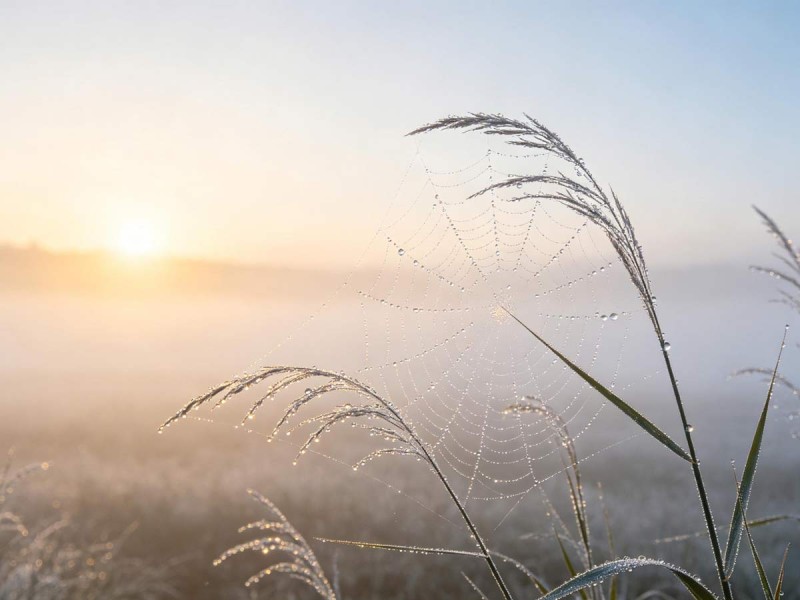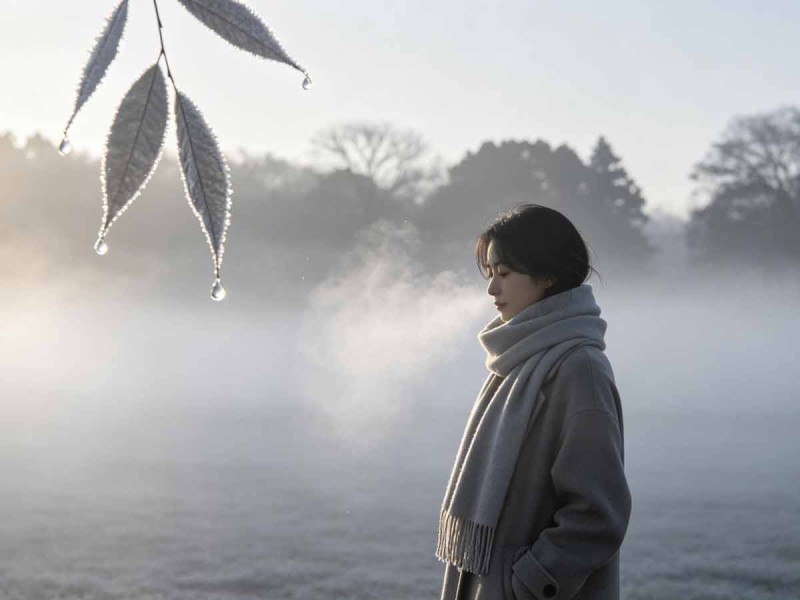
Cold Dew (Han Lu): Cooler Mornings, Deeper Layers—Cosy Without the Rush

Early October across the Northern Hemisphere often has a split personality: shorter light, heavier schedules, chill that shows up before your feed admits it. In the United States, social media sells sweater weather and apple-picking poses while many families are still negotiating AC bills, evacuation bags, or two jobs that barely meet rent. In the UK and much of northwestern Europe, October can land as Atlantic rain, half-term fatigue, and heating decisions made under grey skies. Elsewhere, wildfire smoke, late heat, or an ordinary inbox can dominate—Han Lu still names direction toward cold, even when weather refuses one mood.
Cold Dew, known as Han Lu (寒露) in Chinese, belongs to the 24 solar terms. The English label Cold Dew is blunt: dew that reads cold—a traditional way to say night chill is deepening enough that moisture on grass and metal stops feeling like a gentle summer bead and starts feeling like a warning.
You can treat Han Lu as seasonal literacy, not lore. The modern takeaway: autumn gains teeth—layers, heat, sleep, budget, health habits—whether your Instagram agrees.
What Cold Dew (Han Lu) means (without promising frost on demand)
Traditional framing often describes Cold Dew (Han Lu) as cold dew—the stretch where Yin chill strengthens in classical language (not a replacement for NOAA). Useful translation without metaphysics:
- Night cooling accelerates—radiational cooling on clear nights can produce heavy dew and slick decks.
- Day/night swings widen—layering becomes survival formatting, not aesthetic.
- Harvest pressure continues for many rural economies; urban readers feel different pressure—holiday creep, year-end metrics, election anxiety in even-numbered years.
If you dislike agrarian metaphors, keep it blunt: October stops asking permission.
Cosy without the rush—from the title—is permission to warm your space slowly: socks before thermostat wars, shared blankets before solo stoicism, cheap soup before wellness subscriptions.
E-bike and walking commutes get real in dark, cool hours—visibility, gloves that still let you brake, puddle strategy if you’re in a rainy city. Han Lu is a good week to treat mobility as safety, not aesthetic suffering for steps.
Calendar honesty: October is a spreadsheet wearing a scarf
October stacks competing truths:
- Cultural autumn: pumpkin, playoffs, homecoming.
- Thermal autumn: first frosts in pockets; still-hot afternoons elsewhere.
- Financial autumn: utilities, tuition installments, holiday airfare lurking.
Cold Dew (Han Lu) doesn’t reconcile those truths. It gives one dignified lens: cold gets serious—and serious cold deserves serious kindness, not photo shoots.
For 2026, many published tables place Cold Dew (Han Lu) around October 8. Calendar apps can obsess over exact minutes; daily life mostly needs the seasonal chapter—translate Cold Dew (Han Lu) as early October deepening chill, then adapt actions to your forecast, housing, and health.
Many readers first meet solar terms through horoscope seasons—different systems. Han Lu is East Asian solar-term language about cold dew—not Libra homework. If you share dates with curious friends, plain labels help people stay oriented.
Sleep shifts again: dark mornings can feel heavy; evening screens steal melatonin while sunset arrives earlier each week. Han Lu weeks reward lamps, warm showers, consistent wake times—especially for teens pulled into October workload.

White Dew (Bai Lu) vs Cold Dew (Han Lu) vs Autumn Equinox(Qiu Fen): dew grammar without pedantry wars
People often ask how Cold Dew differs from White Dew and Autumn Equinox. Here’s a clean comparison:
- White Dew (Bai Lu) often emphasizes cool nights producing visible dew—edges begin.
- Autumn Equinox (Qiu Fen) emphasizes balanced day/night—mid-autumn checkpoint.
- Cold Dew (Han Lu) often emphasizes colder dew / deeper chill—later chapter in classical pacing.
Meteorologically, your story varies: Florida may still hum; northern tier may already frost. Solar terms name tendency—your station names records.
Think of Han Lu mainly as a lens on layering, morning chill, and heating prep—without promising specific temperatures or medical outcomes.
Climate change can make tidy seasonal stories feel out of sync—that’s why tradition works best alongside local observation. Cold Dew(Han Lu) can still name psychological texture—the year feels shorter—even when a heat wave bullies your week.
Regional notes: early October is still a quilt of risks and privileges
If you live in northern New England or high-elevation Rockies towns, Cold Dew(Han Lu) can feel visceral—frost flirtations, woodsmoke ethics, ice on windshield mornings.
If you live along the Gulf or Southeast coast, humidity can linger—chill arrives as mean damp, not crisp postcard.
If you live in the Southwest deserts, nights may drop fast while days remain intense—layering is math.
If wildfire smoke persists, “cold dew mornings” may be invisible behind AQI—indoor air wins over romantic walks.
Urban heat islands delay first frost fantasies—concrete banks warmth; unhoused neighbors face cold exposure earlier than suburban postal codes. Honest seasonal language still names warming centers, mutual aid, tenant rights, and energy-bill assistance where relevant—in cosy framing, cosy includes structural care.
Energy poverty is not a mindset problem—October bills can force impossible choices. Seasonal “wellness” fails when it ignores who cannot buy heat.
Indigenous Peoples’ Day and Columbus Day (second Monday in October) sit in the same month as many Han Lu weeks on U.S. calendars—not the same as a solar term, but part of October’s civic soundtrack where those holidays are observed. Respect Indigenous sovereignty and community-preferred names where they matter—without turning a seasonal literacy piece into holiday homework.
Kids’ sports shift too—soccer mud, Friday-night chill, Saturday marching-band mornings. Han Lu doesn’t resolve parent logistics; it can validate thermal realism: pack blankets, thermos, dry socks—boring gear beats noble shivering.

Work, school, health—and the myth of the effortless cosy cottage
October intensifies schedules: midterms, conference season, holiday retail rehearsals. Han Lu energy isn’t only blankets—it’s capacity.
Teachers meet flu factories; nurses meet RSV rhythms; delivery drivers meet dark evenings. Cosy content that only photographs mugs insults that labor.
Chronic pain communities know cold fronts as symptom triggers—arthritis stereotypes aside, real inflammation patterns exist for many bodies. Triumph framing isn’t required here. Heating pads, pace cuts, and clinician-guided plans aren’t weakness.
Mental health note—without treating an article like therapy: shorter light can depress mood for some; SAD risk rises as days shrink—seek professional support if you need it; light therapy decisions belong with clinicians for many people.
Grief can also sharpen in October—anniversaries, the year’s final quarter, holiday dread. Honest language doesn’t pathologize normal sadness, but it can refuse toxic positivity: warm drink, earlier bedtime, one gentle boundary—human-scale tools, not forced gratitude.
Gentle cosy: what “deeper layers” look like on an October weekday
Deeper layers can mean clothing and boundaries:
- three-layer rule for volatile days—base / warmth / wind shell where budgets allow
- draft socks and plastic film on windows where landlords stall
- one shared night a week with phones dimmed—relational warmth counts as heat
- one compassionate “no” to optional October chaos—cosy includes rest
Night recovery matters: warm feet, cool bedroom air if safe, humidifier hygiene if your clinician recommends—cheap scaffolding when mornings feel aggressive.
Rain pattern shifts for many regions—Pacific Northwest drizzle returns; Plains squall lines; Northeast leaf-stuck gutters. Cold Dew chapters can include basement checks, car tires, visibility on dark commutes—adulting as seasonal ritual.
If you live alone, October loneliness can spike when everyone posts orchards while you’re working weekends. Han Lu can permit truth: seasonal joy is often class-flavored. Pair metaphor with one real connection—text, call, mutual aid shift.
How Cold Dew (Han Lu) connects Autumn Equinox(Qiu Fen) to Frost’s Descent
If you read deep autumn as one arc:
- Autumn Equinox (Qiu Fen): equal day/night—midpoint story.
- Cold Dew (Han Lu): cold dew—chill deepens—layers logic.
- Frost’s Descent (Shuang Jiang): first-frost chapter in many tellings—harder stop.
Readers who like to continue in sequence can also explore nearby terms across this deep-autumn arc.
Sensory menu for Northern Hemisphere early October (Look, Smell, Taste, Do)
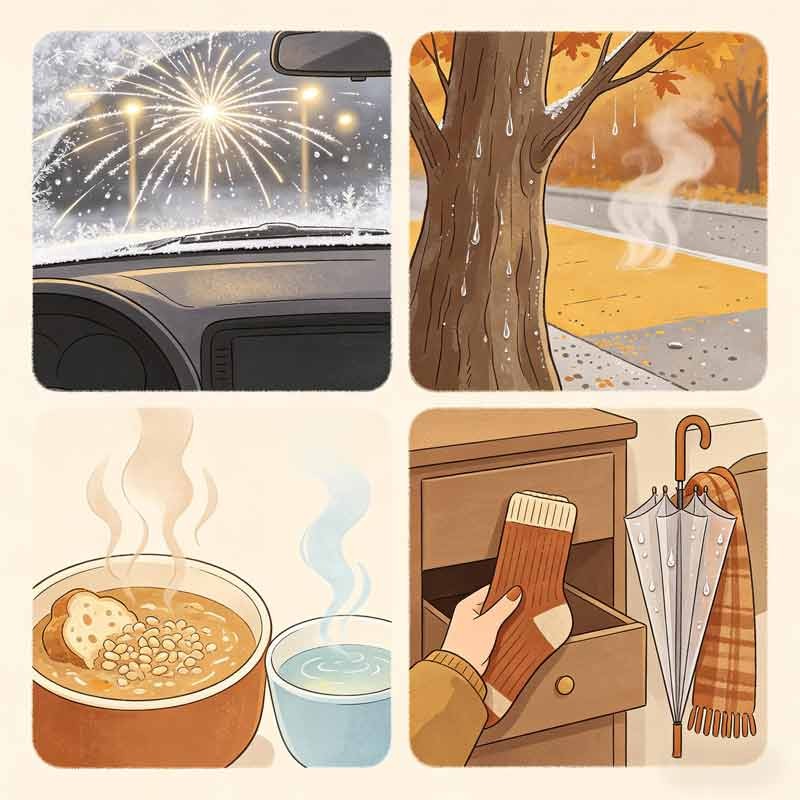
Look Find frost-feigned sparkle on car roofs—honest radiational cooling theater.
Smell Wet bark, first furnace dust, rain on warm pavement—truth beats pumpkin aerosol.
Taste Warm plain food—follow clinician guidance for GERD, diabetes, sodium needs—skip wellness fairy tales.
Do Donate one coat if you can—cosy includes neighbors.
Micro-plan: today, weekend, month
Today (5 minutes) Two lines: today’s low temperature / one layer decision.
This weekend (30 minutes) Emergency kit refresh—flashlight batteries, meds, pet carrier—especially in storm or fire country.
This month (one choice) Pick one heating safety check you’ve postponed—filter, detector, space heater rules—structural beats aesthetic.
FAQ
Q1: When is Cold Dew (Han Lu) in 2026? Many Northern Hemisphere calendars list early October—often October 8 in 2026 depending on tables and time zone. Use the calendar or ephemeris source you trust if you need exact local date/time precision.
Q2: Is Cold Dew (Han Lu) the same as first frost? Not necessarily—first frost varies by latitude and year. Han Lu names a traditional chapter about cold dew, not your local frost date.
Q3: How is Cold Dew (Han Lu) different from White Dew (Bai Lu)? Traditionally Bai Lu reads cool nights + dew beads; Han Lu reads colder dew / deeper chill—a later chapter in many published tables.
Q4: How is Cold Dew (Han Lu) different from Autumn Equinox (Qiu Fen)? Qiu Fen emphasizes near-equal day and night and a mid-autumn checkpoint in many tellings; Han Lu emphasizes deepening chill and colder dew—typically later in the autumn arc.
Q5: Do these ideas still work outside one climate pattern? Yes. Keep the seasonal logic, then adapt cues to your local conditions (temperature, humidity, daylight, pollen, rain). The point is directional timing, not copying another region’s weather.
Q6: Will I see “cold dew” on my lawn in a warm climate (for example Los Angeles)? Maybe not dramatically—translate Han Lu as deepening chill, not postcard dew.
Q7: Who is most at risk from cold stress—and what about heating safety? Infants, elders, unhoused people, and some chronic conditions can be especially vulnerable—follow trusted public health guidance where you live. For heating systems, carbon monoxide, and space heaters, follow local safety guidance and qualified technicians when needed.
Q8: Does buying a throw blanket fix seasonal depression—or what about mood? No—objects don’t replace care. If mood feels unsafe or you are in crisis, seek professional support and use local emergency numbers where you live.
Closing
If you remember one sentence from Cold Dew (Han Lu), remember October asks for warmth in your body and in your systems—and warmth includes community.
One more small practice for the week: when cosy marketing shows a perfect kitchen, ask what budget and housing made that shot possible—then choose one real kindness: layer, meal, check-in, donation.
Read next: Frost's Descent (Shuang Jiang) → Autumn Equinox (Qiu Fen) → the 24 solar terms guide .