Autumn Equinox (Qiu Fen): Even Light, Even Mood—A Mid-Autumn Reset
Late September across the Northern Hemisphere often stacks spectacle and velocity: homecomings, harvest imagery, shorter daylight that surprises your body even when the calendar warned you. In the United States, that can mean floats, orchard weekends, playoff chatter, pumpkin aisles that smell like cinnamon concentrate. In the UK and much of northern Europe, it may land as grey afternoons, new-term fatigue, and earlier dark. Elsewhere, fire seasons, humidity, or an ordinary busy inbox can dominate—equal light still arrives as an astronomical fact, even when life feels uneven.
Autumn Equinox, known as Qiu Fen (秋分) in Chinese, belongs to the 24 solar terms. In plain language: this is the chapter tied to the September equinox—the pivot where day and night lengths approach parity, where autumn deepens in both story and physics, where many cultures historically gathered around harvest, reckoning, and sharing the load.
You can read “Even Light, Even Mood” as aspiration, not guarantee. Qiu Fen is a handle for weeks that want balance while your life may still feel like three jobs and a group chat.
What Autumn Equinox (Qiu Fen) means (without turning astronomy into astrology)
Traditional seasonal language often frames Autumn Equinox (Qiu Fen) as yin and yang balanced—a classical way to say day and night reach an equilibrium point on the year’s slide toward winter. In plain language:
- Clock symmetry: near equal daylight and darkness for many mid-latitudes (polar regions behave differently—honesty matters for international readers).
- Harvest midpoint in many agrarian stories—not your personal productivity deadline unless you choose it.
- Emotional permission: slow the sprint—because light itself is negotiating.
Autumn Equinox is the usual English name for the astronomical event; Qiu Fen helps readers who search pinyin or browse bilingual calendars. In most published tables, this solar term sits close to the September equinox date—use the calendar tool you trust if you need exact local date and time.
A gentle caution on cultural overlap: Mid-Autumn Festival (Zhong Qiu) is lunar, not identical to Qiu Fen. They can land in the same conversational season—you don’t need mooncakes or moonlight on command to understand equal light. Honor community practices as lived traditions—not props for a seasonal aesthetic.
Calendar honesty: equal minutes, unequal lives
Here’s the adult version of balance for late September:
- Astronomy can be neat—equal day/night is a real geometric story for most of us.
- Economics can be messy—rent, tuition, medical bills do not observe equinox diplomacy.
- Bodies can be messy—SAD risk rises for some as light changes; allergies can still rage; smoke seasons can make “crisp autumn” a lung lie.
Autumn Equinox (Qiu Fen) doesn’t fix those inequalities. It can still offer one useful refusal: you are allowed to treat equal light as signal, not moral scoreboard.
For 2026, many published tables place Qiu Fen around September 23—often near the September equinox instant. Calendar apps can obsess over exact minutes; daily life mostly needs the seasonal chapter—translate Qiu Fen as late September reckoning chapter, then adapt rituals to your AQI, heat index, and care load.
Sleep is central: shorter evenings tempt screen revenge at night and coffee compensation in the morning. Qiu Fen weeks reward boring light hygiene—dim warm lamps, outside minutes when air is safe, consistent wake time—especially for families slammed by school-year sleep loss.
Spring equinox echo: two doors, one year (optional symmetry)
Some readers love pairs. In the 24 solar terms, Spring Equinox (Chun Fen) opens the March door to equal light; Autumn Equinox (Qiu Fen) opens the September door. You can treat that as poetry or practical rhythm—either way, it’s the same sky math bookending the year.
Balance in March often reads as emergence; balance in September often reads as reckoning—both are allowed to be complicated.
White Dew (Bai Lu) vs Autumn Equinox (Qiu Fen): dew vs equal light (precision without pedantry)
People often ask which term feels “more autumn.” Here’s a clean comparison:
- White Dew(Bai Lu) often emphasizes cool nights and surface moisture—edges and beads.
- Autumn Equinox often emphasizes parity of light and dark—and harvest midpoint language in classical tellings.
Meteorologically, your September may still be humid, smoky, or indoor-AC dry. Solar terms name tendencies—NOAA names risk.
Think of Qiu Fen mainly as a lens on equal-light weeks—sleep, mood vigilance, gentle pacing—without promising specific temperatures or medical outcomes.
Regional notes: late September is still a hazard quilt
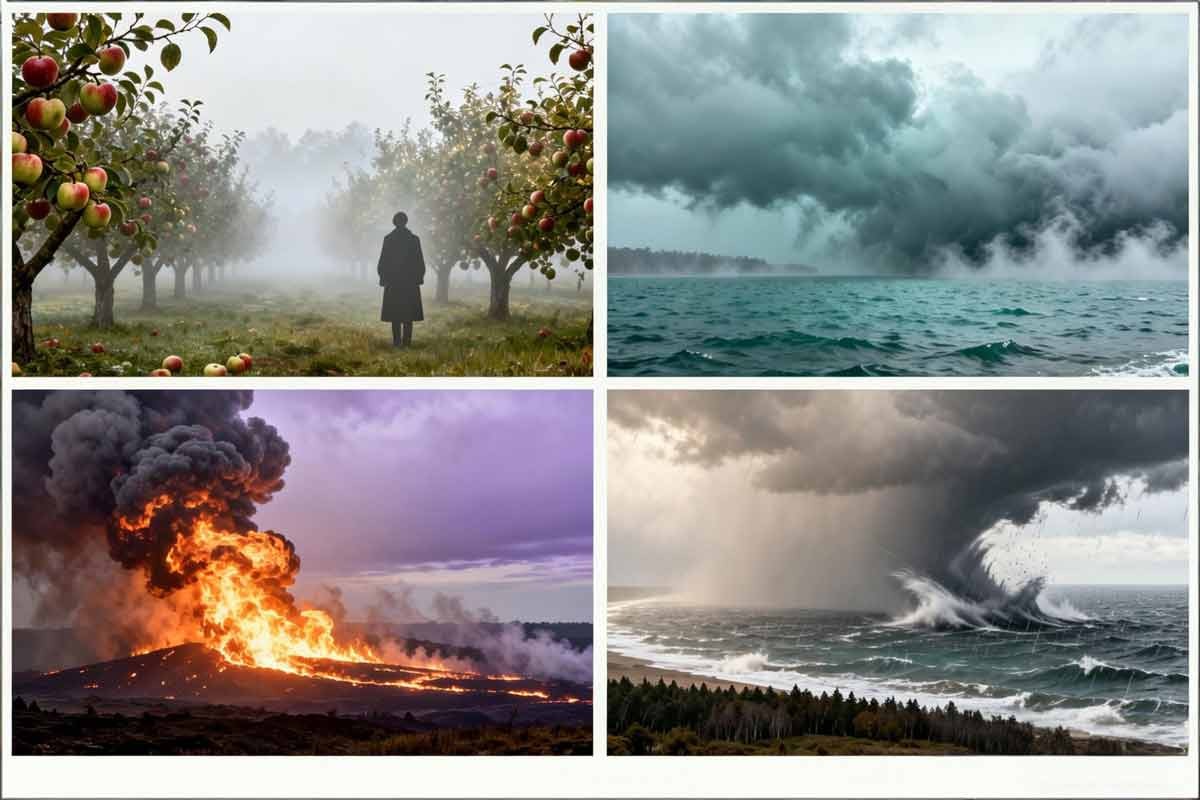
If you live in New England or the Upper Midwest, Qiu Fen can feel viscerally autumn—apples, first frosts in pockets, jacket weather that means it.
If you live in the Southeast, humidity may still bully afternoons—equinox doesn’t magically dry the air.
If you live in the Interior West, September can be peak fire tension—smoke replaces orchard postcards. White Dew’s dew and Qiu Fen’s balance both take a back seat to AQI truth.
If you live near hurricane-prone coasts, September can be statistics and dread—balance includes preparedness and community care, not only lattes.
College towns add another rhythm—parents’ weekends, midterms looming, throat infections pooling in lecture halls. Qiu Fen doesn’t solve tuition anxiety; it can still permit gentle pacing: sleep first, one boundaries conversation, one boring meal cooked at home.
Urban nights cool slower than rural clearings—heat island physics can delay the “crisp” fantasy. Honest seasonal framing doesn’t blame a body for still sweating.
Work, school, harvest pressure, and the myth of the “organized September”
American retail often sells September as fresh start—new planners, new habits, new you—often to people who need sleep more than branding.
Autumn Equinox (Qiu Fen) can honor harvest metaphors without romanticizing labor: farm crews face seasonal peaks; warehouse workers meet holiday preload storms; teachers meet meetings; parents meet forms—balance is often structural, not spiritual.
Seasonal wellness fails when it ignores who cannot buy organic apples and who cannot leave work at “golden hour.” Honest seasonal language still names wages, caregiving, energy poverty, and tenant realities—especially as nights lengthen and heating bills approach.
Chronic illness communities often track light change as symptom trigger—migraine, immune flares, long-COVID light sensitivity. Triumph framing isn’t required here. Small indoor light experiments aren’t failures if outside is unsafe or your allergist says indoor is wiser that week.
Daylight saving time (U.S. “fall back” in early November) is not the same as the equinox—people often mix them up in conversation. Keep the distinction clean: Qiu Fen is a solar-term / astronomical story in late September; DST is policy on a different date.
Gentle reset: what “even mood” looks like on a September weekday
Even mood isn’t aesthetic—it’s scheduling:
- block ten minutes of outside only if air quality allows—otherwise window + filter honesty
- move hardest tasks into your high-focus window—stop obeying influencer dawn
- swap one doomscroll for one official forecast read—information diet is care
- accept earlier hunger—warm food isn’t “giving up summer”; it’s biology
Night recovery matters: curtains drawn earlier, warm shower, phone dimming—cheap circadian scaffolding when sunset steals minutes weekly.
If you live alone, September Sundays can sting—everyone posting orchards while you’re working weekends. Qiu Fen can still name something true: seasonal joy is often gated by money and time. Ground the week with one human connection—low stakes, no performance.
How Autumn Equinox (Qiu Fen) connects White Dew(Bai Lu) to Cold Dew
If you read autumn as one arc:
- White Dew (Bai Lu): cooling nights—moisture—edges.
- Autumn Equinox (Qiu Fen): equal light—harvest midpoint story in classical pacing.
- Cold Dew (Han Lu): deeper chill approaching—heavier mornings in many tellings.
Readers who like to continue in sequence can also explore nearby terms around the autumn arc.
Sensory menu for Northern Hemisphere late September (Look, Smell, Taste, Do)

Look Find one sunset you watch without filming—proof you trust light without content.
Smell Apple bins, wet bark, dry leaves beginning—honesty beats spice oil.
Taste Warm plain—not miracle—fluids; follow clinician guidance for diabetes or kidney limits.
Do Place one scarf where your eyes land—remember layers before your throat complains.
Micro-plan: today, weekend, month
Today (5 minutes) Two lines: what feels lopsided / one tiny correction.
This weekend (30 minutes) Light audit: one room made kinder at night—lamp, curtain, charger relocated.
This month (one choice) Pick one SAD-prevention lever if your clinician agrees—morning light, walk timing, therapy plan—not Instagram solutions.
FAQ
Q1: When is Autumn Equinox (Qiu Fen) in 2026? Many Northern Hemisphere calendars list late September—often September 23 in 2026 depending on tables and time zone. Use the calendar or ephemeris source you trust if you need exact local date/time precision.
Q2: Is Autumn Equinox (Qiu Fen) the same as the astronomical September equinox? In many modern tables, very close—the traditional solar-term marker and the September equinox often land on the same calendar date. Precision varies by source and time zone.
Q3: Is Autumn Equinox (Qiu Fen) the Mid-Autumn Festival? No. Mid-Autumn Festival follows the lunar calendar and varies by year. Qiu Fen is a solar term. They can feel culturally adjacent—different clocks.
Q4: How is Autumn Equinox (Qiu Fen) different from White Dew (Bai Lu)? Traditionally Bai Lu emphasizes cool nights and surface moisture; Qiu Fen emphasizes near-equal day and night and harvest midpoint language in many tellings—typically later in September.
Q5: Do these ideas still work outside one climate pattern? Yes. Keep the seasonal logic, then adapt cues to your local conditions (temperature, humidity, daylight, pollen, rain). The point is directional timing, not copying another region’s weather.
Q6: Is the autumn equinox always on September 22 or 23? Usually—occasionally September 21 or 24 depending on year and time zone. Check the tables you trust.
Q7: Does Autumn Equinox (Qiu Fen) guarantee cool weather—or healthy air for outdoor plans? No guarantee—tradition names a chapter; heat, humidity, and wildfire smoke can persist. Follow official heat and air-quality guidance where you live.
Q8: Is “equinox energy” spiritual—or what about mood and mental health? Here we use secular seasonal literacy—not spiritual claims. If mood feels unsafe or you are in crisis, seek professional support and use local emergency numbers where you live. For spiritual questions, speak with faith leaders in your community.
Closing
If you remember one sentence from Autumn Equinox (Qiu Fen), remember equal light is a simple fact you can borrow for pacing—even when life isn’t fair.
One more small practice for the week: when “fall reset” ads arrive, ask whether you need a brand-new identity or one hour of protected, phone-free sleep. Qiu Fen rewards boring kindness—layers, lamps, honest calendars—over cinematic reinvention.
Read next: Cold Dew (Han Lu) → White Dew (Bai Lu)→ the 24 solar terms guide.