End of Heat (Chu Shu): When Heat Loosens Its Grip—Late Summer Wind-Down

Late August across the Northern Hemisphere often feels like mixed signals: culture pulls toward autumn while thermometers may still disagree. In the United States, one street can look like open-house weekend for back-to-school; another like beach-town August holding on until Labor Day. Elsewhere, the details change—different school calendars, holidays, harvest rhythms—but the tension rhymes: heat warnings on your phone and September-shaped pressure in your inbox.
End of Heat, known as Chu Shu (处暑) in Chinese, belongs to the 24 solar terms—traditional seasonal language for tracking heat, humidity, harvest, and human limits. The plain English name End of Heat can sound absolute. The kinder translation is incremental: swelter begins to unclench—in story, sometimes in night air, occasionally in afternoon cloud cover, not necessarily in one dramatic cold front.
If you’re new to solar terms, treat them as chapter titles—useful narrative handles for modern life, not fortune cookies and not replacements for your national weather service (for example NOAA/NWS in the U.S.).
What End of Heat (Chu Shu) means (without promising you a cold front tomorrow)
Traditional texts often describe Chu Shu as the time when scorching summer is supposed to retreat—fields read a little less stressed, evenings stretch toward breathing room. Modern life translation:
- Night can improve first—dewier grass, saner sleeping temperatures in some climates—while noon still bullies.
- Humidity may lag—sticky doesn’t vanish because a blog post says August is “ending.”
- Shame risk changes shape: July shames you for not enjoying summer; late August shames you for not having your life together before September.
If you dislike classical farm vocabulary, keep the blunt version: late August is allowed to be both hot and tired.
Some readers connect Chu Shu with the idea of “heat exiting” as a psychological permission—less about instant weather than about permission to slow the performance of peak summer. That’s compatible with clinical reality: your risk may still be real; your culture can still stop demanding theme-park stamina.
Calendar honesty: three “endings” in one weekend
Late August stacks competing endings:
- Cultural summer: Labor Day freight, last-chance trips, barbecue shutdown stories.
- School-year summer: districts that start before Labor Day—August can feel like September in practice.
- Solar-term story: Chu Shu—heat loosens in classical pacing, even when humidity disagrees.
Chu Shu doesn’t pick a winner. It gives you one honest container: release can be partial—five degrees at night, ten minutes earlier twilight, one fewer brutal hour—and still count.
For 2026, many published tables place Chu Shu around August 23. Ephemeris precision matters for calendar widgets; psychological precision matters for humans—translate Chu Shu as late August exhale chapter, then adapt behavior to your AQI, heat index, and sleep reality.
Sleep deserves explicit mention: early school mornings can collide with still-hot evenings, wrecking teen sleep and parent patience. Chu Shu is a decent week to treat sleep scaffolding as family infrastructure: dark rooms, earlier alarms with gentler sounds, outdoor movement timed to heat and smoke guidance—not as a moral lecture about discipline.

Start of Autumn (Li Qiu) vs End of Heat (Chu Shu): threshold vs release (without pedantry wars)
Readers love asking how Start of Autumn differs from End of Heat. A clean, non-mystical answer:
- Start of Autumn(Li Qiu) often reads as narrative pivot—autumn begins in traditional language before chill is guaranteed.
- End of Heat(Chu Shu) often reads as thermal plot—heat’s grip slackens in the story after that pivot.
Meteorologically, your mileage varies: some cities feel almost fall by late August; others feel like wet wool until October. Translation for honest marketing: use Chu Shu to discuss late-summer release—sleep, pace, sensory edges—without promising specific temperatures.
If someone asks whether climate change makes Chu Shu “meaningless,” answer with both humility and usefulness: calendar labels will misalign with shifting extremes—that’s exactly why modern seasonal writing must pair tradition with local observation. Chu Shu can still name psychological texture—the feeling that peak-summer propaganda should stop shouting—even when afternoon hums still feel Julyish.
Indian summer chatter will show up in conversation—another folk frame, not identical to Chu Shu. If readers conflate them, keep definitions clean: Chu Shu is a dated solar-term chapter; Indian summer is a loose warm spell story in English-language weather talk. Both can coexist in a life; neither should override official weather and air-quality alerts (for example NWS in the U.S.).
Regional notes: late August is still a hazard map
If you live along the Gulf or mid-Atlantic, heat + humidity can remain dangerous—hydration isn’t vibes; night cooling may help some nights and betray you on others. Cooling access remains an equity issue.
If you live in the Interior West, dry heat may break at night more reliably—also wildfire smoke can replace one problem with another. Indoor filtration counts as seasonal care when AQI spikes.
If you live near the Great Lakes, lake breeze can deliver almost-fall afternoons early—pleasant, not universal.
If hurricane season dominates your emotional weather, late August can be waiting and prep—go-bags, pet plans, elder check-ins. Chu Shu can validate alert habits without glorifying anxiety.
Urban heat islands rarely “end” on a solar term schedule—concrete keeps radiating. Chu Shu language should not blame bodies for still feeling overheated.
Swimming-pool culture can also mislead: public pools may cut hours as “summer” ends on a municipal spreadsheet while thermometers still demand afternoon water for kids and elders. If you write for families, pair End of Heat framing with real access—splash pads, shade at bus stops—not only herbal aesthetics.

Work, schools, and the shame soundtrack of “summer’s over”
Teachers, bus drivers, coaches, and kitchen crews meet August as peak labor heat—AC isn’t evenly distributed across workplaces. Chu Shu wellness content fails when it only photographs iced drinks on clean counters.
Parents meet August as overlapping schedules and fees—schedule apps, costs, emotional whiplash. Students meet it as goodbye freedom dressed as new binders.
Chu Shu doesn’t solve systems; it can refuse one insult: that you should look refreshed while navigating late-summer overload.
Outdoor workers—roofing, delivery, farming, landscaping—still face heat stress statistics in August. Seasonal articles should nod to labor, shade rights, water breaks, and organizing context before recommending mindfulness.
Chronic illness communities often track temperature swings and humidity as symptom amplifiers—migraine, POTS, respiratory conditions. Chu Shu language should avoid triumph framing. Indoor pacing isn’t laziness; canceling outdoor plans on bad AQI days isn’t failure.
Gentle wind-down: what “release” looks like on a late-August weekday
Release is not always aesthetic—it’s administrative:
- move exercise earlier or indoors when heat or smoke spikes
- swap scrolling storm coverage for official sources on a timer—information diet is nervous-system care
- accept weirder appetite—cold suppers are not a character flaw
- schedule one compassionate September buffer—time block, budget line, ask for help
Night recovery matters: dim overhead lights, cool shower then fan, phones out of bed—cheap scaffolding when mornings start too early for teenage biology.
If you live alone, late August loneliness can spike when everyone posts “last beach day” while you’re working weekends. Chu Shu can permit truth: seasonal content is often class-flavored. Pair cultural language with one real human check-in.
How End of Heat (Chu Shu) connects Start of Autumn (Li Qiu) to White Dew
If your library sequences late summer honestly:
- Start of Autumn(Li Qiu): autumn story begins—threshold language.
- End of Heat(Chu Shu): heat loosens—release chapter.
- White Dew (Bai Lu): edges crisp, dew imagery strengthens—early September in many tables.
Readers who like to continue in sequence can also explore nearby terms across this late-summer arc.
Sensory menu for late August (Look, Smell, Taste, Do)
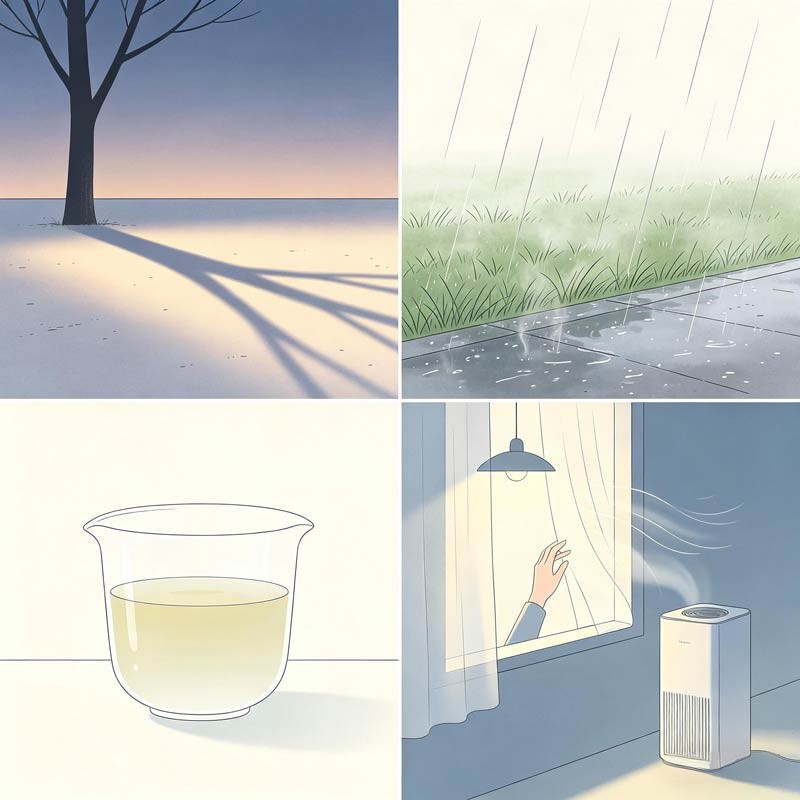
Look Watch one sunset with unhurried eyes—late August light often softens before Instagram admits autumn exists.
Smell Warm lawn, chlorine fading from pools, smoke when fires burn—honesty beats cinnamon.
Taste Electrolytes when appropriate—follow clinician guidance—without moralizing cold vs warm.
Do Turn off one notification category that sells panic disguised as hustle.
Micro-plan: today, weekend, month
Today (5 minutes) Two lines: today’s heat or AQI risk / one sleep-protecting choice.
This weekend (30 minutes) Prep one humane September buffer—folder, shared calendar block, hydration stash for commutes.
This month (one choice) Pick one cooling or air-quality plan if you lack perfect housing—library hours, mutual aid, tenant resources where relevant. Structural beats aesthetic.
FAQ
Q1: When is End of Heat (Chu Shu) in 2026? Many Northern Hemisphere calendars list late August—often August 23 in 2026 depending on tables and time zone. Verify ephemeris precision if your brand requires it.
Q2: Does End of Heat (Chu Shu) mean autumn weather? Not automatically—think classical “heat loosening,” not sweater weather. Astronomical autumn still waits for the September equinox.
Q3: How is End of Heat (Chu Shu) different from Start of Autumn (Li Qiu)? Traditionally Li Qiu begins autumn’s narrative; Chu Shu often reads as heat exiting—a later chapter in the seasonal story. Local weather may blur the line.
Q4: Is late August cooler everywhere in the Northern Hemisphere? No—humid regions can remain oppressive; dry interiors may swing fast; coasts and cities each behave differently. Climate change also shifts extremes. Use local history and forecasts, not folklore alone.
Q5: Do these ideas still work outside one climate pattern? Yes. Keep the seasonal logic, then adapt cues to your local conditions (temperature, humidity, daylight, pollen, rain). The point is directional timing, not copying another region’s weather.
Q6: Is End of Heat (Chu Shu) the same as Labor Day? No. Labor Day is a U.S. federal holiday (first Monday in September). End of Heat (Chu Shu) is a solar-term date on traditional East Asian calendars. They can overlap in mood, but they are not the same thing. In localized editions outside the U.S., you may compare the mood to your own late-summer public holidays instead.
Q7: Wildfire smoke and extreme heat—what should I prioritize? Follow official air-quality and heat guidance from national or local authorities. Protecting breathing often comes before pushing outdoor endurance.
Q8: Can late August feel more stressful or anxious? It can for some people. Seek professional support if mood feels unsafe or if you are in crisis; use local emergency numbers where you live.
Closing
If you remember one sentence from End of Heat (Chu Shu), remember release can be real and still be partial—and partial still counts.
One more small practice for the week: when a headline yells “last chance summer,” ask whether it’s selling inventory or protecting your body. Chu Shu is a good season to prefer boring survival over photo survival.
Read next: White Dew (Bai Lu)→ Start of Autumn (Li Qiu)→ the 24 solar terms guide.