White Dew (Bai Lu): Crisp Edges, Dewy Mornings—Gentle Structure for Scattered Weeks
Early September across the Northern Hemisphere often lands as layered noise: school years restart, holidays and quarter rhythms collide, and afternoons may still feel like August while dawn asks for a light layer. In the United States, the stack can get loud—fantasy football, Labor Day weekend, ragweed season, wildfire smoke headlines, hurricane watch lists. In the UK and much of northwestern Europe, early September more often reads as grey Atlantic mornings and back-to-school traffic than desert smoke—same September velocity, different weather headlines. Elsewhere, harvest calendars and storm seasons vary, but the rhyme holds: the month tends to speed up before it softens.
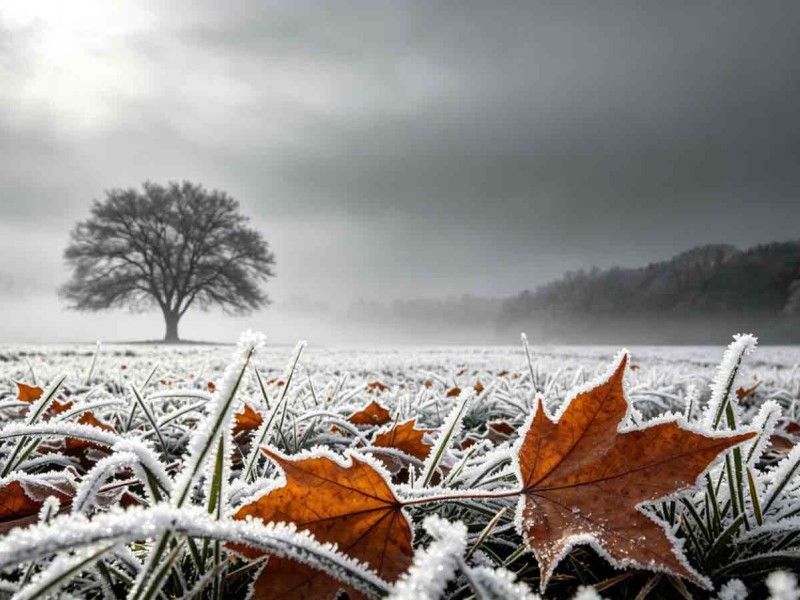
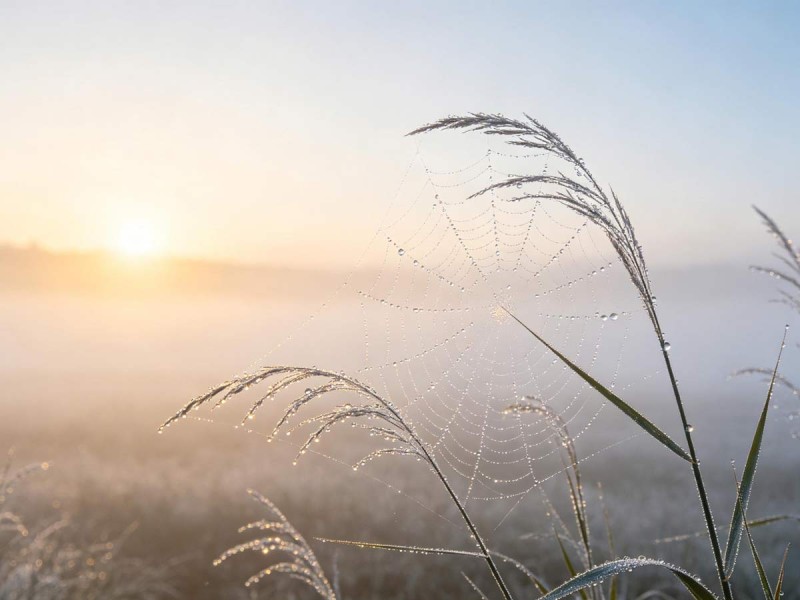
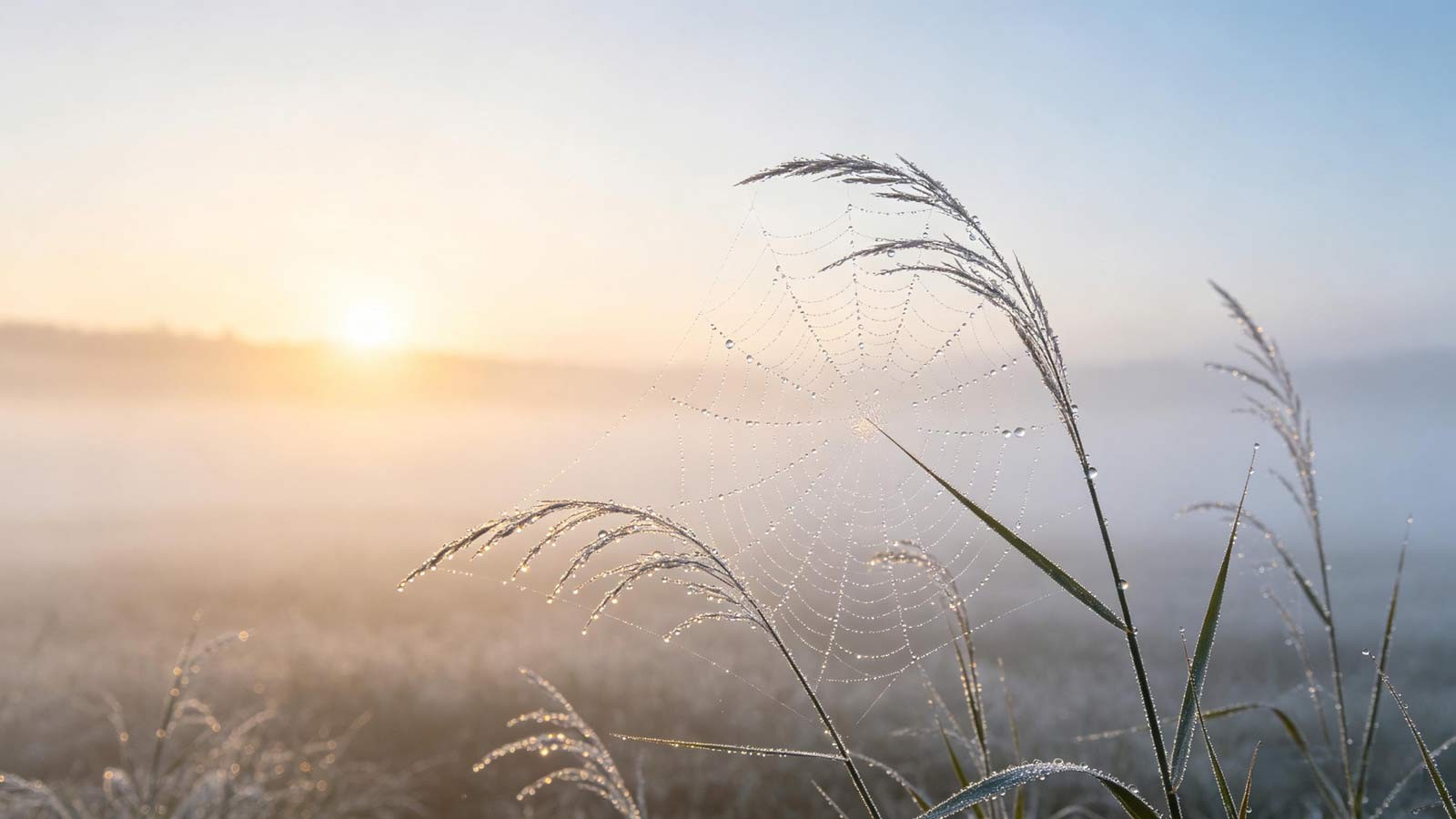
White Dew, known as Bai Lu (白露) in Chinese, belongs to the 24 solar terms—traditional language for tracking temperature swings, humidity, harvest timing, and human pacing. The English name White Dew points at something simple and physical: night air cooling enough that moisture gathers into visible beads—often on grass, sometimes on metal, sometimes on single-pane nostalgia.
You can treat Bai Lu as seasonal literacy—not homework. The useful modern takeaway: edges return—in weather, in schedules, in the way a week can cut.
What White Dew (Bai Lu) means (without forcing a nature documentary)
Traditional framing describes Bai Lu as the season when Yin energy grows—a classical way to say nights lengthen and cool, condensation becomes easier, summer’s soft blur starts to acquire outline. In plain language:
- Cooling nights strong enough that dew points flirt with surfaces.
- Moisture stories—humid breath of morning air, fog in some valleys, dew on spiderwebs if you’re lucky enough to step outside before email.
- Structure pressure—because September is rarely “gentle” in many places; it’s velocity dressed in planner fonts.
If you dislike dew poetry, keep the blunt version: September sharpens.
A quick cultural footnote—not a rule: some East Asian festival talk clusters around mid-autumn motifs as the lunar calendar approaches its harvest-moon season; White Dew(Bai Lu) itself is solar-term language, not a substitute for community holiday practice. White Dew(Bai Lu) reads best as sensory and seasonal—not spiritual homework.
Calendar honesty: sweat, smoke, and the “cozy autumn” industrial complex
September’s cultural autumn often arrives aggressively in U.S. retail—pumpkin everything, home-goods aisles, boot season ads—sometimes before your heat index has caught up. UK readers may feel the same “autumn in the shop” mood with less extreme heat—same calendar mismatch, milder thermostat story.
White Dew offers a steadier frame: small physical evidence that the year is maturing—even if evidence is a wet windshield rather than an orchard.
For 2026, many published tables place White Dew(Bai Lu) around September 7—the same calendar week when many Americans observe Labor Day (first Monday in September). In 2026, Labor Day falls on September 7. That overlap is coincidental, not mystical—yet narratively handy: rest rhetoric collides with return-to-routine panic on the same strip of squares. You can hold both in mind without merging holidays—Labor Day is a U.S. federal holiday honoring workers; White Dew(Bai Lu) is a solar term. Different meanings, sometimes adjacent dates.
Office brains feel another collision: Q4 planning whispers while summer sleep debt still echoes. White Dew(Bai Lu) can validate cognitive whiplash without prescribing productivity cosplay.
If your workplace runs on Slack urgency and stacked calendars, treat edges literally: one meeting shortened, one email delayed until morning, one notification stack muted—micro-structure that respects nervous systems, not LinkedIn theater.
Sleep is core infrastructure here: cooler mornings can tempt earlier wakeups; hot afternoons can tempt caffeine creep. White Dew(Bai Lu) weeks reward boring stability: consistent wake time, dim screens after nine, layers for temperature swing—especially for kids shoved into new schedules overnight.
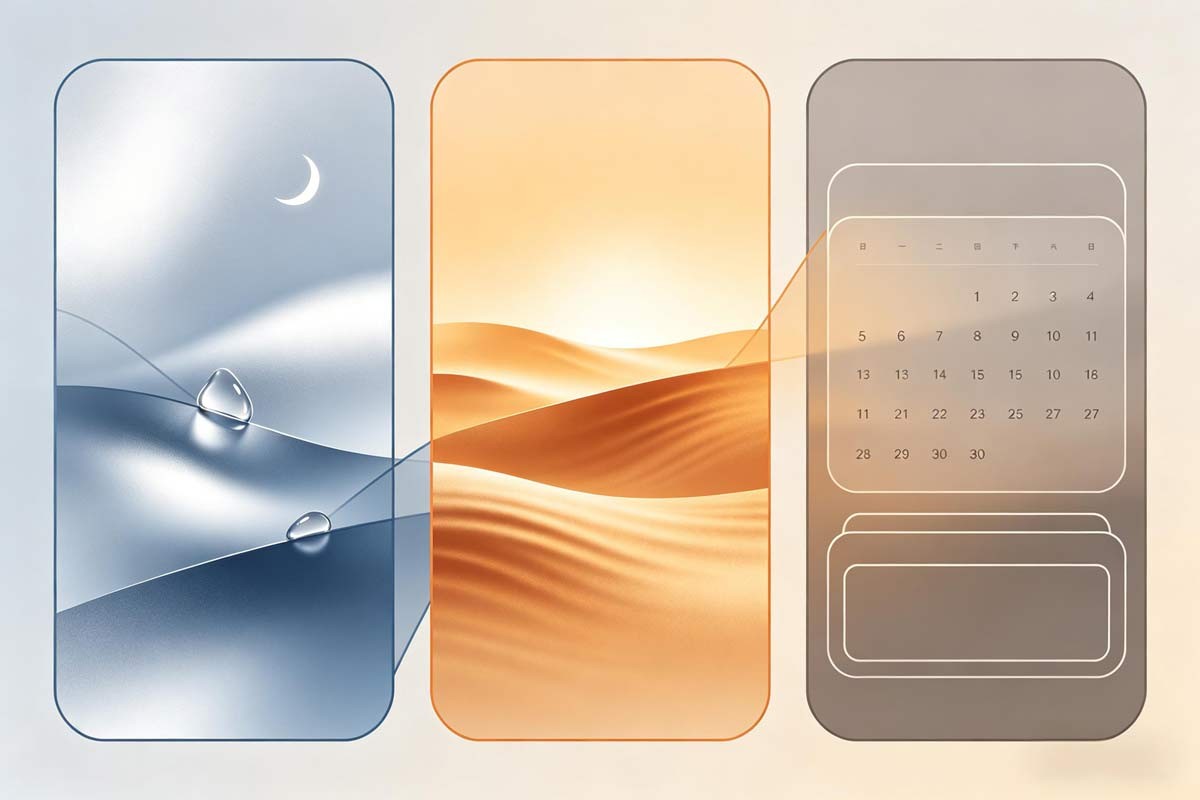
End of Heat (Chu Shu) vs White Dew (Bai Lu): loosening vs beading (sequence, not contest)
People often ask which term feels “more autumn.” Here’s a clean comparison:
- Traditionally: End of Heat (Chu Shu) reads as summer heat loosening; White Dew reads as cool nights condensing moisture—a later chapter in many classical tellings.
- Meteorologically: dew formation depends on dew point, wind, surface, urban heat—your condensation moment belongs to your microclimate, not to a Mandarin label.
Think of White Dew (Bai Lu) mainly as a lens on edges and moisture—skin on arms in the morning, windshield beads, earlier dusk—without promising specific temperatures.
If you worry that climate change makes White Dew (Bai Lu) feel meaningless, humility helps—and so does sticking to what you can observe: calendar nodes can misalign with shifting extremes, which is why tradition works best alongside local observation. White Dew (Bai Lu) can still name psychological texture—the sense that summer’s endless scroll has to yield to September’s invoice energy—even when your afternoons still roast.
Regional notes: early September is a quilt, not a uniform
If you live in northern New England or upper Midwest towns, dew and jacket mornings can feel literal—gifted sensory proof of White Dew (Bai Lu).
If you live along the Gulf or mid-Atlantic, humidity may still feel like a wall—dew exists, but so does heat index. Hydration and heat safety remain serious—especially for outdoor workers and student athletes at practice hours that ignore nice essay titles.
If you live in arid interiors, dew might be subtle—translate White Dew (Bai Lu) into night drop and dry-air throat mornings—still physics, still edges.
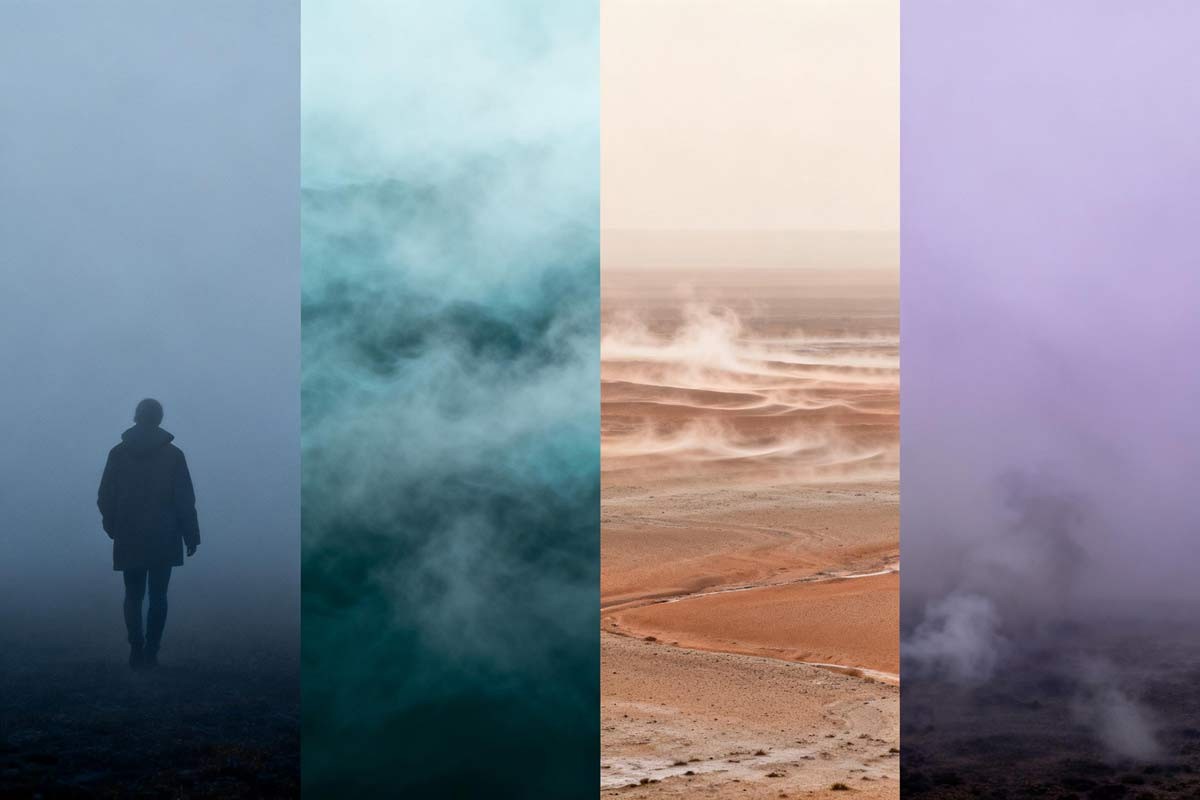
If wildfire smoke stains your sky, “crisp” becomes ironic—AQI replaces aesthetic autumn. White Dew (Bai Lu) weeks should center filtration, indoor movement, and mask guidance per officials—not cinnamon vibes.
Urban heat islands can delay night cooling—dew arrives later or softer than in suburban lawns. Zip code morality helps nobody; local forecast helps everyone.
Hurricane season peaks through September for many coastal readers—September can mean watch lists and fatigue. Practical seasonal literacy includes government alerts and neighbor check-ins, not only tea steam photos.
High school Friday-night lights and college-town Saturdays add another September soundtrack—crowd heat, traffic, noise curfews colliding with cooling dawn. White Dew (Bai Lu) doesn’t resolve stadium economics; it can still permit small pacing: ear plugs, hydration you will actually drink, leaving one social event on time so sleep doesn’t become a September casualty.
Allergies, lungs, and the shame of “I should love September”
Ragweed and other late-summer allergens do not care about your mood-board autumn. Cozy seasonal language fails when it pretends crisp air equals easy breathing.
Chronic illness communities track temperature swings and humidity shifts—migraine, asthma, MCAS, long-COVID sensitivities vary. Triumph framing isn’t required here. Staying indoors on bad AQI days isn’t weakness; using meds as prescribed isn’t “unnatural.”
Teachers, nurses, warehouse workers, and delivery drivers meet September as volume—not just latte foam aesthetics. Union contracts, breaks, ventilation, and fair scheduling matter more than tips for mindful walks when the air isn’t safe.
Gentle structure: what “edges” look like on a September weekday
Structure isn’t minimalism cosplay—it’s survival formatting:
- Layering—keep a stupid cardigan everywhere—car, desk, kid backpack—because morning lies about afternoon.
- Calendar triage—delete one optional September commitment that exists only to soothe LinkedIn guilt.
- One sensory anchor—open a window if AQI allows for ninety seconds—otherwise HEPA hum counts as seasonal sound.
- Accept appetite weirdness—cold dinner, hot lunch—without moral drama
Night recovery matters: warmer lamp light, phone out of bedroom, earlier wind-down if your kid’s bus steals sleep. Cheap scaffolding beats September heroism.
If you live alone, September FOMO spikes when everyone posts orchards while you’re stuck in HVAC and inbox. Bai Lu can still name something true: seasonal marketing is often class-flavored. Ground the week with one human check-in—text, call, low-stakes hang.
How White Dew (Bai Lu) connects End of Heart (Chu Shu) to Autumn Equinox
If you read late summer and early autumn as one arc:
- End of Heat (Chu Shu): heat loosens—late August exhale.
- White Dew (Bai Lu): cooling nights—moisture—edges.
- Autumn Equinox (Qiu Fen): even day and night—midpoint story for many readers.
Readers who like to continue in sequence can also explore nearby terms in the early-autumn arc.
Sensory menu for Northern Hemisphere early September (Look, Smell, Taste, Do)
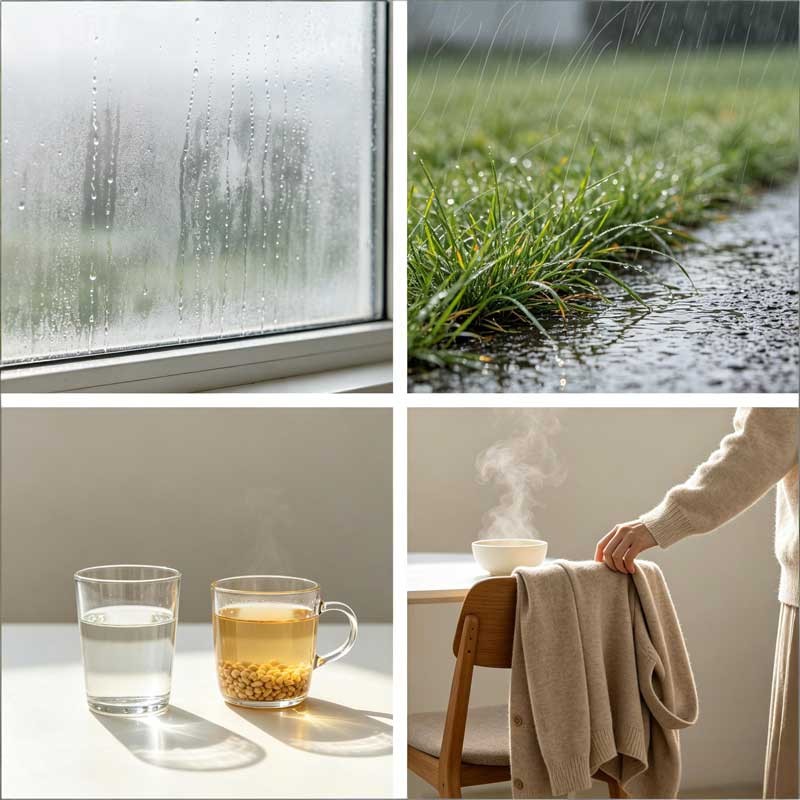
Look Trace condensation on glass—evidence, not décor.
Smell Mown grass, binder plastic, distant smoke—honesty beats candle marketing.
Taste Warm plain fluids—when clinically appropriate—without miracle branding.
Do Pack one layer you will actually wear—kindness to Future You at 5 p.m.
Micro-plan: today, weekend, month
Today (5 minutes) Two lines: today’s air quality / heat / one sleep-protecting choice.
This weekend (30 minutes) Label one September anxiety—money, custody weekends, caregiving—and assign one small action, not a life redesign.
This month (one choice) Pick one allergy or lung care habit with your clinician—not crowd-sourced—or one mutual-aid channel if storms threaten your region. Structural beats aesthetic.
FAQ
Q1: When is White Dew (Bai Lu) in 2026? Many Northern Hemisphere calendars list early September—often September 7 in 2026 depending on tables and time zone. Use the calendar or ephemeris source you trust if you need exact local date/time precision.
Q2: Does White Dew (Bai Lu) overlap U.S. Labor Day in 2026? Labor Day is the first Monday in September. In 2026, Labor Day falls on September 7 on many U.S. calendars—the same date many tables use for Bai Lu. Overlap is coincidental, not causal: Labor Day is a U.S. federal holiday; Bai Lu is a solar-term label on traditional East Asian calendars. Different meanings, sometimes adjacent dates.
Q3: Will I see actual dew where I live? Maybe—more likely when nights cool quickly or humidity is high enough. Dry climates may show dew less dramatically; translate White Dew as cooler-night physics and sharper edges, not grass mandatory.
Q4: How is White Dew (Bai Lu) different from End of Heat (Chu Shu)? Traditionally Chu Shu emphasizes summer heat loosening; Bai Lu emphasizes cooling nights strong enough for condensation imagery—a later chapter in many classical tellings. Local weather may blur the line.
Q5: Do these ideas still work outside one climate pattern? Yes. Keep the seasonal logic, then adapt cues to your local conditions (temperature, humidity, daylight, pollen, rain). The point is directional timing, not copying another region’s weather.
Q6: Is White Dew (Bai Lu) the same as the autumn equinox? No. The September equinox is an astronomical midpoint (near-equal day and night). White Dew is solar-term language that often appears earlier in September in many published tables.
Q7: Can September still be dangerously hot—or have unhealthy air quality? Yes. Follow official heat and air-quality guidance from national or local authorities where you live. Dew metaphors do not lower heat index or AQI.
Q8: Does White Dew promise better mental health—or what if I feel low? No promise of outcomes. If mood feels unsafe or you are in crisis, seek professional support and use local emergency numbers where you live.
Closing
If you remember one sentence from White Dew (Bai Lu), remember September likes to speed up before it softens—and edges can be gentle if you build them as structure, not punishment.
One more small practice for the week: when “fall reset” marketing knocks, ask whether you need a reset or one hour of quiet. Bai Lu rewards small physics—condensation, layers, sleep—over performative renewal.
Read next: Autumn Equinox (Qiu Fen)→ End of Heat (Chu Shu)→ the 24 solar terms guide.